
Why Your Garbage Disposal Smells Like Rotten Eggs After Memorial Day Cookouts
Memorial Day weekend brings backyard barbecues, big family meals, and a kitchen sink that takes a serious beating. By Tuesday morning, many Woodstock homeowners notice a sour, sulfur-like odor rising from the drain. That rotten egg smell almost always points to food debris trapped inside your garbage disposal. Grease from burgers, corn husks, watermelon rinds, and potato salad scraps can coat the grinding chamber and feed bacteria. The longer that buildup sits, the worse the odor becomes. Hot Georgia weather speeds up the decay, turning a minor smell into a kitchen-wide problem. Knowing why this happens and how to fix it can save your holiday memories from being ruined by a stinky sink.
What Causes a Garbage Disposal to Smell Like Rotten Eggs After a Cookout
Cookouts produce a unique mix of food waste that overwhelms most home disposals. Fatty meats, starchy sides, and fibrous vegetables all behave differently once they hit the grinding chamber. When these items break down, they release sulfur compounds; that gas creates the classic rotten egg smell. High humidity in late May accelerates bacterial growth inside the unit. Add warm pipes from a busy kitchen, and you have the perfect environment for odor to thrive. Most homeowners assume the disposal is broken, but the unit is usually working fine; the problem lives in the food residue stuck to the blades, splash guard, and drain walls.
Common Cookout Foods That Trigger Rotten Egg Smells in Your Garbage Disposal
Hamburger grease is one of the biggest culprits behind disposal odors after Memorial Day. Beef fat solidifies as it cools, coating the inside of the grinding chamber with a sticky layer. That layer traps bits of bun, cheese, and ketchup, which then begin to rot. Bacteria feed on this mixture, releasing hydrogen sulfide gas that smells exactly like rotten eggs. Sausage drippings and hot dog scraps add even more grease to the mix. Many homeowners pour leftover grease down the drain without thinking, which speeds up the buildup. Within 24 to 48 hours, the smell becomes impossible to ignore.
Corn cobs, watermelon rinds, and potato peels are equally problematic. These fibrous foods wrap around the grinding components and refuse to break down properly. Stringy material clogs the impellers and slows the motor, leaving large chunks behind. Those chunks sit in standing water and ferment quickly in warm weather. Potato peels release starch that turns into a thick paste, which sticks to every surface inside the chamber. Watermelon rinds break down into a slimy pulp that feeds odor-causing bacteria. Each of these items should go in the trash or compost bin instead of the disposal.
Coleslaw, baked beans, and macaroni salad are the silent troublemakers most people overlook. Mayonnaise-based dishes contain oils that cling to the rubber splash guard and never fully rinse away. Baked beans add sugar and protein, which bacteria love to consume. Pasta swells when exposed to water, expanding inside the drain line and creating partial blockages. Those blockages hold water and food particles against the disposal walls. Within a day or two, the trapped material starts to ferment and release sulfur gas. A thorough cleaning is the only way to remove this hidden residue.
How Warm Weather Worsens Garbage Disposal Smells After Memorial Day
Georgia summers create the ideal conditions for bacterial growth inside your plumbing system. Temperatures in late May often climb into the upper eighties, warming both your kitchen and your pipes. Warm pipes hold heat longer, which accelerates the decomposition of trapped food. Bacteria multiply faster in warm, moist environments, doubling their population every twenty minutes under the right conditions. That rapid growth produces large amounts of hydrogen sulfide, the gas responsible for the rotten egg smell. Homes in Woodstock and surrounding areas often experience this issue more intensely than cooler regions.
Humidity also plays a major role in how strong the odor becomes. Moist air traps smells inside the kitchen instead of letting them dissipate naturally. Running the air conditioner pulls some moisture out, but the area directly under the sink stays damp. That dampness allows mold and mildew to grow alongside the bacteria. The combination produces a layered odor that smells like rotten eggs mixed with mustiness. Opening windows rarely helps because the outside air carries even more humidity. Mechanical cleaning of the disposal is the only reliable solution.
Stagnant water inside the P-trap makes the problem significantly worse. The P-trap is the curved pipe under your sink that holds water to block sewer gases. After heavy cookout use, food particles often settle in this water and begin to rot. Warm temperatures speed up that decomposition, releasing sulfur compounds back up through the drain. If your disposal sits unused for a day or two after the holiday, the smell intensifies dramatically. Running cold water and the disposal together helps flush these particles down the line. Persistent odors may indicate a deeper clog that requires professional attention. Need help clearing a stubborn drain? Click here for our drain cleaning service.
Why Bacteria Build Up Quickly and Cause Rotten Egg Smells in Disposals
Garbage disposals are not self-cleaning, despite what many homeowners believe. Every grind cycle leaves behind tiny particles of food on the blades and chamber walls. Those particles become food for bacteria already present in your kitchen plumbing. Once bacteria establish a colony inside the disposal, they reproduce continuously. Their waste products include hydrogen sulfide, methane, and other gases that smell terrible. A single cookout can introduce enough food residue to support millions of bacteria within hours. The smell you notice is essentially bacterial waste rising through the drain opening.
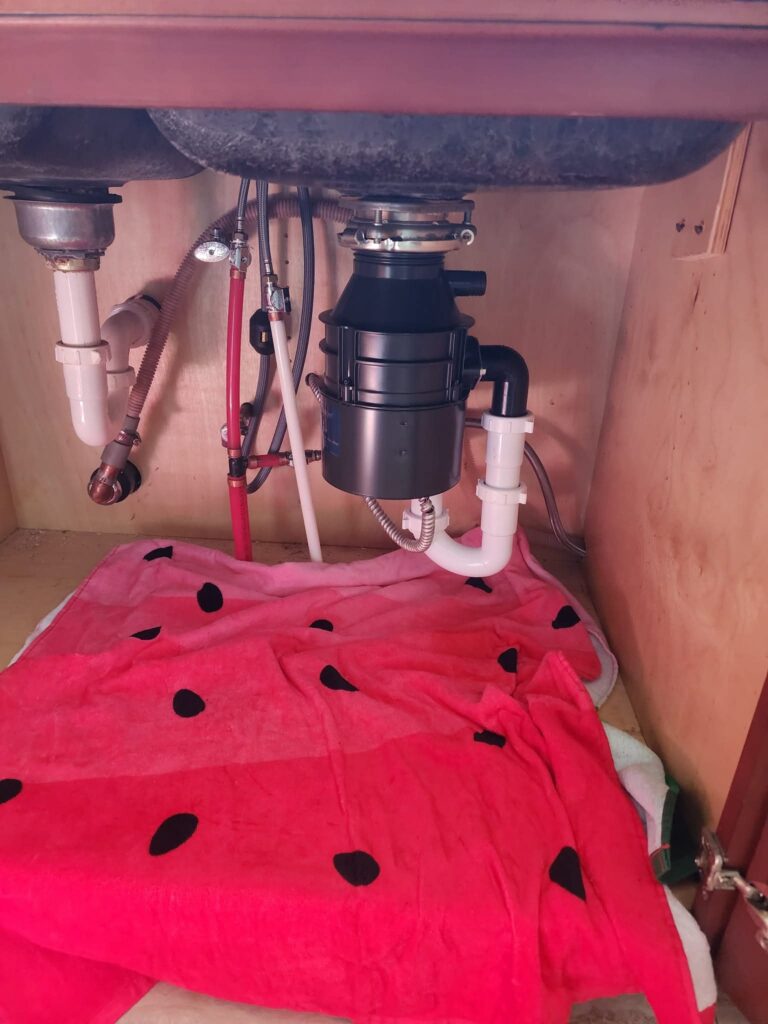
The rubber splash guard is the most overlooked breeding ground for bacteria. This flexible flap sits at the top of the disposal and prevents food from flying out during operation. Food particles cling to both sides of the rubber, hidden from view. Most homeowners never lift or clean this component, allowing buildup to accumulate for months. After a heavy cookout, the splash guard can hold a thick layer of grease, sauce, and food fragments. Bacteria thrive in this protected environment because water rarely reaches the underside. Cleaning the splash guard regularly prevents most odor problems.
Biofilm is another reason odors return quickly after a basic rinse. Biofilm is a slimy layer of bacteria, food residue, and minerals that coats the inside of pipes and disposals. Once established, it becomes extremely difficult to remove with water alone. Bleach and dish soap can kill surface bacteria but rarely penetrate the full biofilm layer. Professional cleaning tools and enzyme treatments break down biofilm at its base. Without addressing biofilm, the rotten egg smell will return within days. Routine maintenance keeps biofilm from forming in the first place.
How to Eliminate the Rotten Egg Smell From Your Garbage Disposal After Memorial Day
Getting rid of the rotten egg smell requires more than running water through the disposal. You need to physically remove the food residue, kill the bacteria, and clean every surface inside the unit. The good news is that most homeowners can complete a thorough cleaning in under thirty minutes. Specific tools and ingredients make the job easier and more effective. Skipping steps usually means the smell returns within a day or two. Following a complete cleaning routine restores your kitchen to its normal scent. Severe or recurring odors may signal a problem that requires a licensed plumber.
Step-by-Step Cleaning to Remove Rotten Egg Smells From Your Garbage Disposal
Start by turning off the power to the disposal at the breaker for safety. Never put your hand inside the disposal, even when the switch is off. Use tongs or pliers to remove any visible food debris stuck near the blades. Lift the rubber splash guard and scrub both sides with an old toothbrush and dish soap. Pay special attention to the underside, where most grease and food particles hide. Rinse the splash guard thoroughly with hot water before reinstalling it. This single step often eliminates a large portion of the odor.
Next, pour one cup of baking soda into the disposal, followed by one cup of white vinegar. The mixture will foam and bubble, which helps loosen grease and food residue from the chamber walls. Let the solution sit for ten to fifteen minutes without running water. The chemical reaction breaks down organic material and neutralizes acidic odors. After the waiting period, flush the disposal with hot water for sixty seconds. Run the disposal during the rinse to help dislodge any remaining particles. This combination is safe for pipes and septic systems.
Finish the cleaning by grinding ice cubes and rock salt together inside the disposal. Fill the chamber about halfway with ice, then add a quarter cup of coarse salt. Turn the disposal on with cold water running and let it grind until the ice is gone. The ice scrubs the blades and chamber walls, while the salt acts as a mild abrasive. This step removes any remaining grease and sharpens the cutting edges slightly. Follow up with a few citrus peels, such as lemon or orange, for a fresh scent. Your disposal should now smell clean and run smoothly.
Natural Ingredients That Eliminate Rotten Egg Smells in Your Garbage Disposal
Citrus peels are one of the most effective natural deodorizers for garbage disposals. Lemon, lime, orange, and grapefruit peels contain oils that cut through grease and leave a fresh scent. Cut the peels into small strips before adding them to the disposal. Run cold water and turn the unit on, feeding the peels in slowly. The citric acid helps dissolve mineral deposits and bacterial buildup. Use citrus peels once a week to maintain a clean-smelling disposal year-round. Avoid using whole fruits, since the pulp can clog the drain line.
Hot water and dish soap provide a simple weekly maintenance routine. Plug the sink and fill it with several inches of hot water mixed with grease-cutting dish soap. Pull the plug while running the disposal, allowing the soapy water to flush through the entire system. The volume of water carries food particles down the drain line instead of leaving them in the P-trap. Hot water melts grease that cold water leaves behind. This method works especially well after cooking fatty foods like bacon or hamburgers. Repeat the process anytime you notice a faint odor returning.
Borax is a stronger option for tackling persistent rotten egg smells. Sprinkle three to four tablespoons of borax into the disposal and let it sit for one hour. The compound kills bacteria and breaks down organic residue without damaging pipes. After the waiting period, flush the disposal with hot water for one full minute. Borax is safe for most plumbing systems but should be used sparingly. Always keep borax out of reach of children and pets. If the smell persists after using borax, the problem may extend beyond the disposal itself. Suspect a deeper issue? Click here for our leak detection service.
When Rotten Egg Smells in Your Garbage Disposal Signal a Bigger Plumbing Problem
A persistent rotten egg smell that returns within hours of cleaning often points to a problem deeper in your plumbing. Sewer gas can leak into your kitchen through a dry P-trap, a cracked pipe, or a failing vent stack. These issues require professional diagnosis because they can affect your home’s air quality. Sewer gas contains hydrogen sulfide, methane, and ammonia, all of which are harmful in high concentrations. If you smell rotten eggs throughout the house, not just at the sink, call a plumber immediately. Carbon monoxide detectors do not detect sewer gas, so you cannot rely on them for warning. Trust your nose and act quickly.
Slow drainage combined with a rotten egg smell often indicates a partial clog in the main drain line. Food debris from heavy cookout use can accumulate in the pipes leading away from your kitchen. That buildup traps water and creates pockets where bacteria thrive. A licensed plumber can use a camera inspection to find the exact location of the clog. Hydro-jetting or mechanical snaking clears the line completely and restores proper flow. Ignoring slow drains leads to backups, flooding, and costly repairs. Early intervention is always cheaper than emergency service.
A failing garbage disposal motor can also contribute to lingering odors. Older units may not grind food finely enough to flush down the drain, leaving large pieces behind. Those pieces sit in the chamber and rot, no matter how often you clean. If your disposal hums but does not grind, or if it leaks water from the bottom, replacement is usually the best option. Modern disposals are quieter, more efficient, and easier to maintain than older models. A professional installation ensures proper alignment, secure connections, and warranty coverage. Need a new unit installed? Click here for our garbage disposal installation service.
Why You Need Professional Help for Persistent Garbage Disposal Smells
Some garbage disposal odors go away with a thorough cleaning, while others require a trained plumber’s expertise. Knowing the difference saves you time, money, and frustration. Plumb Medic has served Woodstock and the surrounding North Atlanta area for years with honest, dependable service. Our licensed technicians diagnose the root cause of odor problems instead of just masking the smell. We use professional tools and proven techniques to restore your kitchen plumbing to peak performance. Same-day appointments are often available during busy holiday weeks.
Why Persistent Rotten Egg Smells Need a Licensed Plumber’s Attention
Sewer gas leaks pose real health risks and should never be ignored. Long-term exposure can cause headaches, dizziness, and respiratory irritation. A licensed plumber can locate and seal leaks safely using specialized detection equipment. Homeowners often miss the source because gas can travel through walls and floors before reaching the kitchen. Professional diagnosis eliminates guesswork and gets your home back to normal quickly. Trying to fix sewer gas issues without training can make the problem worse.
Recurring clogs and slow drains often hide deeper plumbing problems. Tree roots, collapsed pipes, and grease buildup all cause persistent odors that home cleaning cannot fix. A camera inspection reveals exactly what is happening inside your drain lines. Plumb Medic uses high-resolution video equipment to identify problems quickly and accurately. Repairs are then targeted to the specific issue, saving you from unnecessary work. This approach is faster and more cost-effective than trial-and-error fixes.
Old or damaged disposals create odors that no amount of cleaning will resolve. Cracked housings, worn seals, and corroded blades all trap food in ways that resist normal maintenance. Replacing the unit is often the most economical long-term solution. A new disposal handles food waste more efficiently and reduces the risk of future clogs. Plumb Medic offers a range of models to fit different budgets and household needs. Professional installation ensures proper fit and reliable performance for years to come.
Why Routine Maintenance Prevents Rotten Egg Smells in Garbage Disposals
Regular maintenance is the easiest way to avoid foul odors after holiday cookouts. Cleaning your disposal weekly keeps grease and food residue from building up in the first place. Running cold water before, during, and after each use helps flush particles down the drain line. Avoid putting fibrous, starchy, or greasy foods in the disposal whenever possible. Small changes in daily habits make a big difference over time. Homeowners who follow a maintenance routine rarely deal with persistent smells.
Annual plumbing inspections catch small problems before they become expensive repairs. A licensed plumber can spot worn seals, loose connections, and early signs of corrosion during a routine visit. Catching these issues early prevents leaks, clogs, and odors down the road. Inspections also include checking the disposal, P-trap, and drain lines for any buildup. Plumb Medic offers thorough inspections at fair prices for homeowners across the Woodstock area. Preventative care always costs less than emergency service.
Professional drain cleaning every one to two years keeps your entire plumbing system running smoothly. Hydro-jetting clears grease, soap scum, and food debris from the inside walls of your pipes. The process is safe for most plumbing materials and lasts much longer than chemical drain cleaners. Clean pipes drain faster, smell better, and resist future clogs. Plumb Medic technicians explain every step of the process and answer any questions you have. Regular cleaning protects your home and extends the life of your plumbing fixtures.
Why Choose Plumb Medic for Garbage Disposal Service in Woodstock
Plumb Medic stands out as Business Rate’s Best of Woodstock Plumber 2025, a recognition earned through years of dedicated service. Every technician on our team is fully licensed and experienced in residential plumbing. We waive diagnostic fees when you hire us for the repair, which saves you money from the start. Military and senior discounts are available for those who have served our country or community. Financing through Wisetack makes larger repairs and installations more affordable.
Our commitment to the community goes beyond plumbing service. Plumb Medic donates two percent of every service call to Children’s Healthcare of Atlanta, supporting local families when they need it most. We are TracPipe and Navien certified, which means we handle gas lines and tankless water heaters to the highest industry standards. Our twenty-four-hour emergency service ensures help is available whenever you need it. Honest pricing and clear communication guide every job we complete.
Call Plumb Medic today at (470) 384-9762 to schedule garbage disposal cleaning, repair, or replacement service. Our office at 225 Creekstone Ridge Suite 19 in Woodstock serves homeowners throughout Kennesaw, Roswell, Alpharetta, Marietta, and beyond. We answer the phone promptly and work hard to fit your schedule. Email us at office@theplumbmedic.com for non-urgent questions or to request a quote. Trust the team that puts service, integrity, and your family’s comfort first.