
Why Your Water Heater Anode Rod Decides How Long the Whole Tank Lasts
Most homeowners never look at the anode rod, yet that single piece of metal controls how many years the water heater survives. Every tank type heater is built from steel, and steel rusts the moment it sits in hot water. Manufacturers fight that problem two ways: they line the inside of the tank with a thin glass coating, then they hang a sacrificial anode rod down the center of the tank to absorb the corrosion the lining cannot stop. The rod gives itself up so the steel does not have to. When the rod is used up and nobody replaces it, corrosion moves to the tank wall and starts eating the vessel from the inside out. Late summer and early fall are the right time to check it, because incoming water temperature drops through October and the burner or heating elements run harder to keep up. A tank that is already weak often chooses the first cold stretch to fail.
What the Water Heater Anode Rod Does Inside the Tank
The anode rod is a long metal rod threaded into the top of the tank, usually under a hex head on the heater’s top panel or hidden inside the hot water outlet fitting. It works through galvanic corrosion, the same electrochemical reaction that eats a boat propeller or a buried pipe. Two different metals sitting in water create a small electrical cell, and the more reactive metal corrodes first. Magnesium and aluminum are both more reactive than steel, so the rod dissolves while the tank stays intact. Understanding that process explains why the rod has a service life and why ignoring it guarantees a shorter life for everything around it.
How the Water Heater Anode Rod Stops the Tank From Rusting
Water is an electrolyte, and hot water is an aggressive one. The glass lining sprayed inside a residential tank looks continuous, but it never is; there are pinholes in the coating, bare spots around the weld seams, and exposed steel at the threaded fittings where the nipples and the drain valve screw in. Left alone, those small bare areas would begin to rust within months of installation. The water heater anode rod changes the electrical balance inside the tank so that current flows away from the rod and toward the steel, which puts the steel into a protected state. Corrosion still happens, and it happens at a steady rate, but it happens to the rod rather than to the vessel holding sixty gallons of hot water above your floor. That is the entire design principle, and it is the reason a thin steel tank can last a decade in an environment that would destroy unprotected steel in a year or two.
The rate at which the rod gives itself up depends on the water running through your home. Softer water, which is common on much of the North Georgia municipal supply, carries fewer dissolved minerals and tends to be more electrically aggressive, so magnesium rods can disappear faster than the label suggests. Homes running a water softener see the fastest consumption of all, because the sodium exchanged into the water raises conductivity and speeds the reaction; a rod that would normally last five years can be gone in two. Well water in the Ball Ground and Canton areas brings its own variables, including sulfur content and higher mineral loads that change how the rod behaves. Thermostat setting matters as well, since every increase in stored temperature accelerates the chemistry. Households of five people running two showers every morning consume anode material faster than a couple who travels half the year. None of those factors are flaws in the heater; they simply mean the inspection interval has to match the house, not the brochure.
There is a second reason the rod matters that most people never hear about, and it involves the fittings rather than the tank body. The dip tube, the outlet nipple, and the drain valve all create points where dissimilar metals meet, and those junctions corrode first when protection runs out. A depleted rod means galvanized nipples begin to scale, restricting flow and reducing hot water pressure at the fixtures long before the tank leaks. Sediment production also climbs, because corrosion byproducts settle to the bottom and mix with the calcium and magnesium already dropping out of the water. That layer insulates the burner from the water on a gas heater and buries the lower element on an electric one, which drives up energy use every month. Protecting the tank protects efficiency, flow, and recovery time at the same time.
Water Heater Anode Rod Metals and How Long Each One Lasts
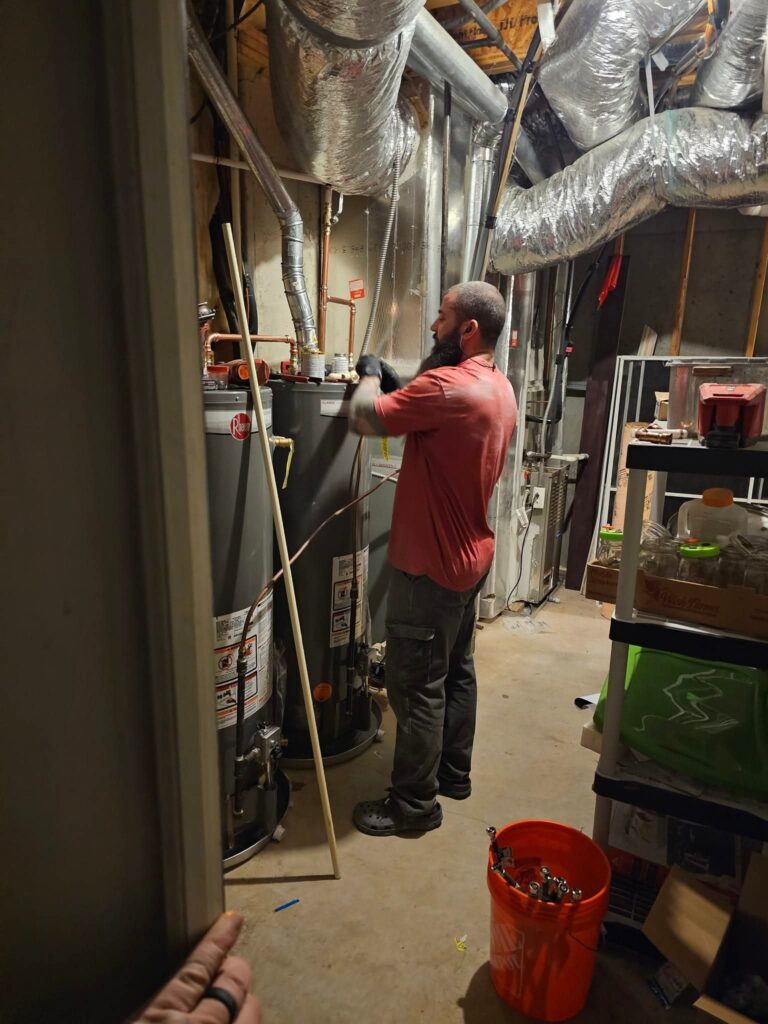
Magnesium is the most common factory rod and the most protective option available in a standard tank. It sits farther from steel on the galvanic scale, which means it delivers stronger current and better coverage of bare spots in the lining. That strength comes with a tradeoff, because magnesium is consumed faster than the alternatives, especially in soft or softened water. In average conditions a magnesium water heater anode rod runs three to five years before it needs replacement. Homes with heavy use or a softener frequently need one at the two year mark. Magnesium also produces more hydrogen gas as it reacts, which is harmless in normal quantities but worth knowing about after a vacation when the tank has sat unused.
Aluminum and aluminum zinc rods take the opposite approach. They corrode more slowly, so they last longer in hard water and in tanks where a magnesium rod would be devoured in a season. The zinc content in an aluminum zinc alloy serves a specific purpose: it interferes with the sulfate reducing bacteria responsible for the rotten egg smell that shows up in hot water on some well systems. Aluminum rods do swell and can bend as they degrade, which sometimes makes removal harder years later. They also produce a slightly different byproduct, and some homeowners prefer magnesium for water they drink and cook with. A licensed plumber can look at your water chemistry, your existing rod, and your usage pattern before recommending a replacement metal instead of simply installing what came in the box.
The third option is the powered anode rod, and it solves problems the sacrificial versions cannot. A powered rod uses a titanium element and a small transformer that plugs into a nearby outlet, pushing a low voltage current into the tank instead of relying on a metal that dissolves. Because nothing is consumed, the rod does not need replacement on a schedule and can outlive the tank itself. Powered rods are the most reliable fix for persistent sulfur odor, and they work well in homes with softeners where sacrificial rods vanish too quickly to be practical. They cost more up front and require a working receptacle within reach of the heater. For a family that keeps a heater in a finished basement or a closet where a leak would be expensive, the upgrade often pays for itself. If your current tank is showing its age and you want an honest evaluation before spending money on parts, click here for our water heater inspection service.
What Happens to the Tank After the Water Heater Anode Rod Is Gone
Once the rod erodes down to its bare steel core wire, protection effectively stops. The core wire itself is steel, and steel offers no sacrificial benefit; at that point the water heater is running unprotected and the clock starts on the tank. Corrosion begins at the weakest spots in the glass lining, usually near the bottom of the tank where sediment holds moisture and heat against the wall. Rust grows outward from those points until it perforates the steel completely. The failure is almost always a pinhole first, and pinholes do not announce themselves; they weep slowly into the pan or the floor until someone notices a damp spot or a musty smell in the closet.
A tank that has rusted through cannot be repaired, and no plumber in Georgia will tell you otherwise. Welding a lined tank destroys the lining, epoxy patches fail under pressure and temperature cycling, and the rest of the vessel is in the same condition as the spot that leaked. Replacement is the only real answer once the steel is compromised. That is what makes anode maintenance such a lopsided value proposition: a rod and an hour of labor cost a fraction of a new heater, new fittings, new venting, and the drywall repair that comes with a flooded utility room. The math never favors waiting. It favors checking the rod every two to three years and replacing it before the core wire shows.
There is also a real risk factor that goes beyond property damage. A tank weakened by internal corrosion has less strength holding back normal system pressure, and pressure inside a closed plumbing system climbs every time the burner fires. Thermal expansion in a home with a pressure reducing valve or a check valve at the meter has nowhere to go without a working expansion tank, and that stress lands on the weakest component. Combine an aging tank with a failed temperature and pressure relief valve and you have a genuinely dangerous appliance. Regular service keeps the relief valve, the expansion tank, and the anode rod all doing their jobs together. Any of those parts failing quietly is a problem; all three failing at once is an emergency.
Signs Your Water Heater Anode Rod Needs Replacement
Anode rods do not have gauges or indicator lights, so the warning signs arrive through the water itself. Smell, color, sound, and recovery time all change as protection runs out and corrosion moves into the tank. Age is the other clue, and it is the most reliable one; a heater past its fifth birthday that has never had the rod checked almost certainly needs one. Catching these symptoms in September gives you time to act before the coldest months, when groundwater entering the tank drops below sixty degrees and the heater runs far longer per cycle. Waiting until the tank is struggling on a January morning is how homeowners end up paying emergency rates for a replacement they could have scheduled on their own terms.
Smelly Hot Water Points to a Water Heater Anode Rod Problem
The classic rotten egg odor in hot water comes from hydrogen sulfide gas, and the water heater anode rod is almost always involved. Sulfate reducing bacteria live harmlessly in many water supplies, particularly well systems, and they feed on the hydrogen produced as a magnesium rod reacts inside the tank. The byproduct is hydrogen sulfide, which smells like sulfur and clings to towels and dishes. The telling detail is that the smell shows up only on the hot side; cold water from the same tap runs clean. Homeowners often blame the drains or the fixtures and spend weeks chasing the wrong problem. A plumber can confirm the source in minutes by comparing hot and cold samples at the same faucet.
The fix depends on how far the problem has progressed and what your water contains. Switching from a magnesium rod to an aluminum zinc alloy solves most cases, because the zinc suppresses the bacterial activity that generates the gas. When the smell persists after the swap, a powered anode rod removes the food source entirely by eliminating the sacrificial reaction. In heavily colonized systems the tank itself needs to be sanitized with a chlorine treatment and flushed before the new rod goes in, otherwise the bacteria simply repopulate. Raising the thermostat temporarily above 140 degrees also kills the organisms, though that carries a scalding risk and requires a mixing valve to be safe. None of these steps involve replacing the water heater, which is why an accurate diagnosis matters so much.
Odor problems frequently point to broader water quality issues in the home, and treating only the heater misses the larger picture. Well systems around Ball Ground, Canton, and Holly Springs can carry iron, sulfur, sediment, and bacteria that affect fixtures, appliances, and the taste of everything you cook. A whole home treatment approach protects the new anode rod, the tank, the dishwasher, and the washing machine at the same time. Filtration also slows the mineral scaling that shortens heater life independently of corrosion. Water that is easier on the plumbing is easier on every appliance connected to it. If the smell or taste of your water has been bothering you, click here for our water filtration systems service.
Rusty Water and Noise Show the Water Heater Anode Rod Has Failed
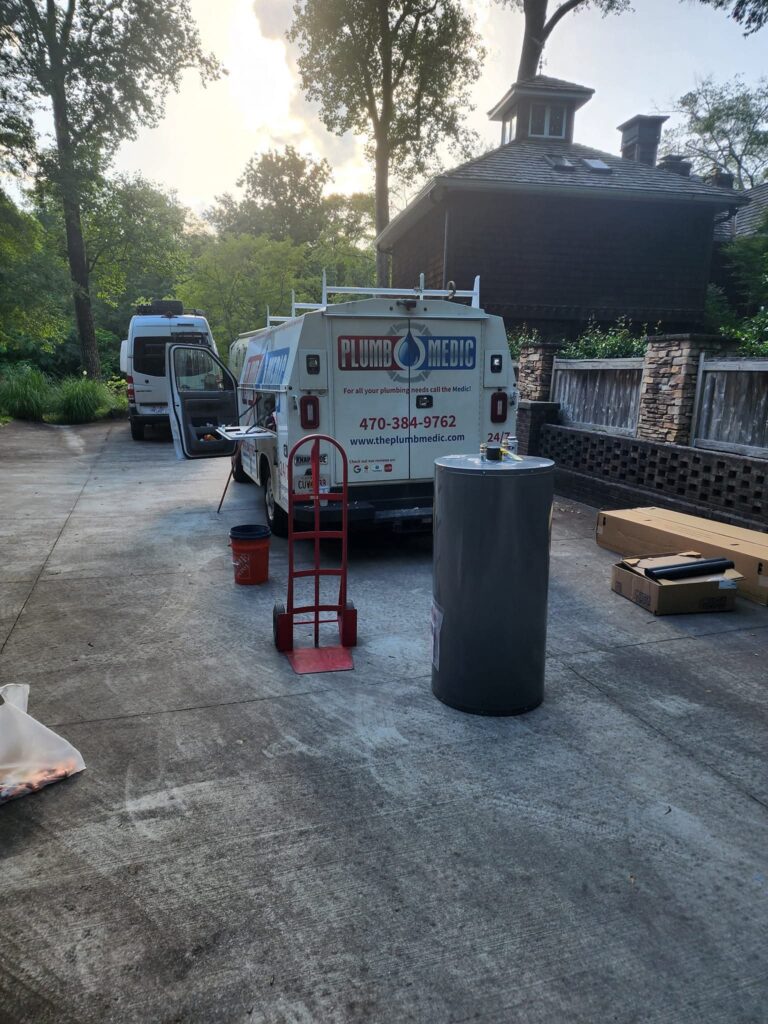
Brown or reddish tint in hot water is a serious signal, and it usually means the anode rod is finished and the tank has begun corroding. Run the cold tap at the same fixture as a comparison; clean cold water alongside discolored hot water isolates the problem to the heater. Sometimes the color comes from the galvanized nipples at the top of the tank rather than the vessel itself, which is a cheaper repair, but it still tells you protection has lapsed. Rust particles also collect in aerators and shower heads, reducing flow at individual fixtures over time. Once you see color, the tank is no longer a maintenance question and becomes a timeline question. A plumber can pull the rod, inspect the fittings, and tell you honestly how much life is left.
Popping, rumbling, and crackling from the tank are related symptoms with a different mechanism. Those sounds come from water trapped under a hardened layer of sediment on the tank floor, flashing to steam as the burner heats the steel beneath it. Sediment accumulates faster in a tank losing anode protection, because corrosion byproducts add to the calcium and magnesium already settling out. The insulating layer forces the burner to run longer for the same result, raising gas or electric bills every month. It also overheats the steel at the bottom of the tank, which accelerates the very corrosion the rod was installed to prevent. A thorough flush combined with a new rod stops that cycle when it is caught early enough.
Slow recovery is the third symptom in the group and the one families notice first. When the second or third shower of the morning goes lukewarm on a heater that used to handle four, sediment and scale are usually the reason. A failing dip tube can produce the same complaint by dumping cold water at the top of the tank instead of the bottom. Electric heaters add another possibility, since a lower element buried in sediment burns out and leaves only the upper element working, cutting effective capacity roughly in half. Each of these has a specific repair and none of them require replacing a sound tank. Getting an accurate diagnosis before spending money is the entire point of a service call. When your hot water quits keeping up, click here for our water heater repair service.
How to Inspect a Water Heater Anode Rod Before Fall Demand Rises
Inspecting a water heater anode rod is straightforward work, though it is heavier than it looks. Power or gas gets shut off first, the cold water supply valve closes, and a hot tap opens somewhere in the house to break the vacuum. Several gallons drain out to drop the water level below the anode port. The hex head takes a 1 1/16 inch socket, and factory rods are torqued down hard and frequently seized by years of heat cycling; a breaker bar and a second person bracing the tank are often necessary. Tanks in tight spaces need a segmented rod, since a solid rod is over three feet long and will not clear a low ceiling. Threads get sealed properly on reassembly, and the tank refills and purges air before power returns, because energizing an electric element in a partially filled tank destroys it in seconds.
What the plumber looks at once the rod is out is simple. A healthy rod still shows most of its original three quarter inch diameter with a rough, pitted surface. A spent rod is a thin steel wire with a few chunks of metal clinging to it, and it gets replaced immediately. Anything worn below roughly half its original thickness, or showing bare core wire along six inches or more, is at the end of its useful life. A rod coated in a hard calcium shell is another finding, since scale can insulate the rod and prevent it from working even when plenty of material remains. The condition of the rod also reveals what the water is doing to the rest of the tank.
Timing the inspection for late summer or early fall makes practical sense in Georgia. Incoming water temperature falls steadily from September onward, and the heater compensates by running longer cycles and holding higher internal stress. Holiday guests, extra laundry, and longer showers all pile onto the same appliance in November and December. Finding a depleted rod now means a scheduled repair on a Tuesday afternoon rather than an emergency on Thanksgiving morning. It also gives you room to make a real decision if the tank turns out to be too far gone, including comparing a standard replacement against a tankless upgrade. Planning beats reacting every single time.
Why You Need Professional Water Heater Anode Rod Service in Woodstock
Anode rod replacement looks like a simple part swap, and the part itself is inexpensive. The difficulty lives in everything around it: seized threads, awkward clearances, gas connections, electrical disconnects, and the risk of cracking the glass lining or snapping a nipple with too much force. A tank full of 140 degree water sitting on a finished floor does not forgive mistakes. Professional service also brings a full evaluation of the relief valve, the expansion tank, the venting, and the connections, so the whole system gets checked instead of one component. That combination is what actually extends the life of the heater.
What Professional Water Heater Anode Rod Service Includes
A proper water heater anode rod service starts with a diagnosis rather than a part. The technician tests water temperature and pressure, checks the thermostat setting, inspects the temperature and pressure relief valve, and looks at the expansion tank charge. On a gas unit the venting and combustion air supply get verified, since a corroded flue or a blocked vent creates a safety issue independent of the tank. On an electric unit the elements and thermostats are tested for resistance and continuity. All of that information shapes the recommendation, and it tells you honestly how much life the heater has left.
Removing and replacing the rod follows a specific sequence for good reason. Fuel or power off, supply closed, pressure relieved, partial drain, then extraction with the tank braced against the twisting force. Seized rods sometimes require an impact wrench and penetrating oil, and low clearance installations call for a segmented replacement. The new rod is selected based on water chemistry rather than convenience, with aluminum zinc for sulfur problems, magnesium for standard municipal supply, and a powered rod for softened water or persistent odor. Threads get sealed correctly, the tank refills, air purges from the lines, and the technician verifies operation before leaving.
A rod replacement pairs naturally with a full tank flush, since both require draining and both address the same failure path. Removing sediment restores burner efficiency, quiets the popping, and protects the new rod from being buried in scale. Combining the two into one visit saves labor and gives the heater a genuine reset. Most homeowners in Woodstock, Canton, Acworth, and Marietta do well on a two to three year cycle for inspection with flushing as needed. Homes on wells or softeners belong on a tighter schedule.
Water Heater Anode Rod Service Protects Your Warranty and Your Budget
Manufacturer warranties on tank heaters run from six to twelve years, and the length usually reflects how much anode material the unit carries from the factory. Longer warranty models often ship with a larger rod or a second one installed in the hot outlet. Those warranties assume the rod stays in place and stays functional, and removing it without replacement gives the manufacturer a clean reason to deny a tank failure claim. Documented maintenance strengthens your position considerably when something does go wrong. Keeping records of service visits costs nothing and protects real money.
The financial argument is simple arithmetic. Replacing an anode rod is a minor expense measured against a full water heater replacement with new venting, connectors, permits, and disposal. Adding three to six years of service life to an existing tank is a large return on a small investment. Efficiency gains matter too, since a clean tank with a working rod transfers heat properly and stops wasting fuel on an insulating sediment layer. Water damage from a ruptured tank dwarfs all of it. Insurance deductibles and flooring replacement make a preventive service call look inexpensive in hindsight.
Some tanks are past saving, and honest advice means saying so. A twelve year old heater with rust in the water and a corroded outlet nipple is not a candidate for a rod; it is a candidate for replacement before it fails on its own schedule. In that situation homeowners should compare a standard tank against a tankless system, which has no tank to corrode and no anode rod to maintain, though it requires periodic descaling instead. Tankless units also free up floor space and deliver continuous hot water for larger households. Our team is TracPipe and Navien certified, so gas conversions and tankless installations are handled correctly from the fuel line forward. If you are weighing your options for a new unit, click here for our tankless water heaters service.
Why Choose Plumb Medic for Water Heater Anode Rod Service
Plumb Medic serves Woodstock and the surrounding communities with fully licensed and experienced technicians on every call. We named the business after the idea that plumbing problems deserve a diagnosis before a prescription, and anode rod work is a perfect example of that principle. Our technicians tell you what the rod looks like when it comes out, show you the wear, and explain what the finding means for the tank. There is no upsell to a new heater when a rod and a flush will do the job. There is also no false optimism when the tank has genuinely reached the end.
Practical details matter when you are hiring a plumber. We waive the diagnostic fee when we handle the repair, we offer financing through Wisetack for larger jobs like a full replacement, and we extend military and senior discounts to our neighbors who have earned them. Emergency service is available 24/7, because a leaking water heater does not schedule itself around business hours. Business Rate named us Best of Woodstock Plumber for 2025, which we appreciate and intend to keep earning. We also donate two percent of every service call to Children’s Healthcare of Atlanta.
We cover Woodstock, Kennesaw, Canton, Acworth, Marietta, Roswell, Alpharetta, Milton, Holly Springs, Ball Ground, Cumming, Dallas, Cartersville, Duluth, Dunwoody, Johns Creek, Sandy Springs, Sugar Hill, and Suwanee. Fall is the right window to get the anode rod checked, before cold incoming water pushes your heater through its hardest months of the year. An inspection now can add years to a tank you already own and save you from an unplanned replacement in the middle of winter. Call Plumb Medic at (470) 384-9762 to schedule water heater anode rod inspection and replacement, or email us at office@theplumbmedic.com to set up a visit at your convenience.