
The Garbage Disposal Mistakes That Cause Thanksgiving Kitchen Disasters
Thanksgiving puts more strain on a kitchen sink than any other day on the calendar, and the garbage disposal absorbs the worst of it. A normal weeknight sends a few scraps down the drain, while a holiday meal pushes peelings, drippings, trimmings, and plate scrapings from a dozen people through the same small grinding chamber in the span of a few hours. Most disposals handle daily use without complaint, so homeowners naturally assume the unit can swallow anything the holiday throws at it. That assumption is the single biggest reason plumbers across Cherokee County and North Fulton field so many calls on Thanksgiving night and again on Black Friday morning. The failures we respond to are rarely caused by a defective appliance; they are caused by a short list of habits that feel harmless right up until the sink fills with standing water in front of a house full of guests. Knowing which scraps belong in the trash can, understanding how water temperature changes what happens inside your drain line, and recognizing what a humming motor is telling you will keep the kitchen moving from the first pie crust to the last load of dishes. The sections below break down the specific mistakes that cause holiday backups, along with the practices that prevent them.
The Most Common Garbage Disposal Mistakes That Cause Thanksgiving Kitchen Clogs
Nearly every Thanksgiving disposal failure traces back to material that should never have gone down the drain in the first place. A garbage disposal is a grinder rather than an incinerator; its job is to reduce soft food waste into particles small enough for water to carry through a two inch drain line and out to the sewer or septic system. Anything that turns into paste, rope, or a solid mass along the way will stop moving the moment it reaches the first bend in the pipe, and once the flow slows down, everything behind it begins to pile up. Three categories of food cause the overwhelming majority of holiday clogs in the homes we service, and all three of them appear on the same Thanksgiving menu. Understanding exactly why each one creates trouble makes the rule simple to remember long after the leftovers are gone.
Garbage Disposal Mistakes With Grease and Turkey Drippings
Grease is the leading cause of Thanksgiving drain failures, and turkey drippings are the worst offender of the day. When you pour hot fat from a roasting pan into the sink, it moves like water and disappears without any sign of trouble, which is precisely what makes the mistake so easy to repeat. A few feet into the drain line, that fat cools against the pipe wall and reverts to the semisolid state it had before the oven melted it. Each pour adds another layer to the inside of the pipe, narrowing the opening the same way plaque narrows an artery. Gravy, bacon grease, butter, cream sauces, and the fat that renders off a turkey all behave identically once they lose heat. Running hot water while you pour does not solve the problem; it simply moves the cooling point farther down the line, often into the section of pipe buried under the slab or out in the yard where a repair costs considerably more.
The correct approach takes almost no extra effort and saves a substantial amount of money. Pour drippings and excess fat into an empty can or a heat safe jar, let the contents harden on the counter, and drop the whole thing in the trash once it cools. Wipe greasy pans, plates, and roasting racks with a paper towel before they ever reach the sink, since the film left on dishware adds up quickly across a holiday sized pile of dishes. When you do run the disposal, use cold water rather than hot, because cold water keeps any residual fat in a solid state long enough for the grinding chamber to break it into small pieces and flush it through. That single habit does more for your drain line than any product sold in a grocery store aisle. Households on septic systems should be even more disciplined, since fats reduce the effectiveness of the bacterial action inside the tank and shorten the interval between pump outs.
Grease that has already accumulated announces itself well before Thanksgiving arrives. A kitchen sink that drains slower than it did last year, gurgling from the dishwasher air gap, or a faint sour smell that returns a day after cleaning all point to a coated drain line rather than a dirty disposal. Plunging and store bought chemicals rarely fix this condition, because they hollow out a narrow channel through the buildup instead of removing the layer itself. A professional cable machine or a hydro jetter scours the pipe wall back to its original diameter, which restores full flow and buys you years before the problem returns. Dealing with a slow kitchen drain right now? Click here for our drain cleaning service. Handling it in the weeks before the holiday costs far less than an emergency call on a Thursday evening in late November.
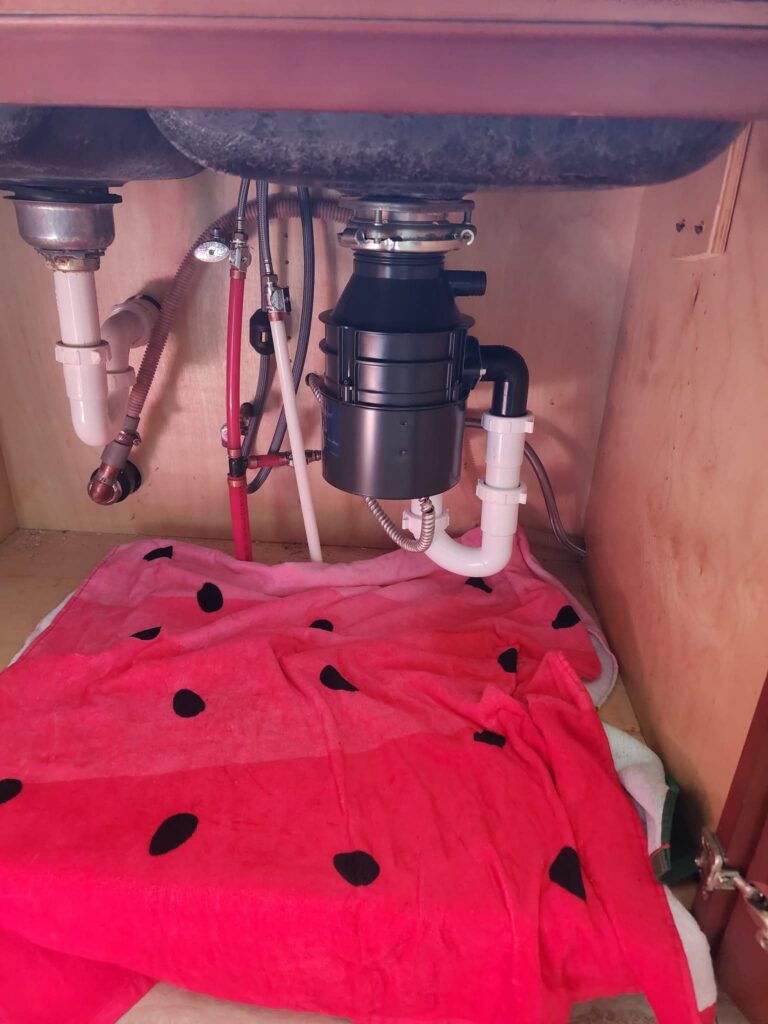
Garbage Disposal Mistakes With Potato Peels and Starchy Thanksgiving Sides
Potato peels look like the ideal candidate for a disposal, and that is exactly why so many people feed an entire colander of them into the drain at once. The problem has two parts. First, the peels themselves are thin and flexible, so instead of being ground into particles they mat together into a wet layer that behaves like a stack of wet paper. Second, potatoes release a large volume of starch as they are cut and crushed, and that starch mixes with water into a thick paste with genuine adhesive properties. The mat and the paste combine inside the grinding chamber and the trap below it, forming a plug that water pressure alone cannot push through. Ten pounds of potatoes for a holiday crowd produces enough peel volume to overwhelm even a powerful unit in under a minute.
The same warning applies to nearly every starchy dish on the Thanksgiving table. Rice, pasta, stuffing, bread, oatmeal, and beans all continue absorbing water after they leave the plate, which means they expand inside the drain line rather than breaking down. Leftover mashed potatoes scraped off serving dishes are especially stubborn, since they are already in paste form when they hit the drain. Most of this material settles in the P trap directly under the sink, the curved section of pipe that holds standing water to block sewer gas from entering the room. When that trap fills with starch, the disposal side of the sink backs up first, and homes with a dishwasher connected to the disposal often see dirty water pushed back into the dishwasher tub during the next cycle. That backflow leads many homeowners to believe they have two broken appliances when they actually have one clogged pipe.
Managing starchy waste is straightforward once the reason behind the rule is clear. Peel vegetables over a bowl, a paper bag, or a compost container rather than over an open sink, and empty that container into the trash before you begin washing up. Scrape plates thoroughly into the garbage can before rinsing, since the disposal should be handling the small residue left behind rather than the bulk of the meal. If a modest amount of starchy material does go down, run a strong stream of cold water for a full minute afterward so the particles stay suspended and travel past the trap instead of settling in it. Feed waste in small portions with the water already running rather than packing the chamber full and switching the unit on afterward. That gradual approach lets the motor maintain speed and gives the drain line a fighting chance to carry the load away.
Garbage Disposal Mistakes With Fibrous Vegetables and Bones
Fibrous vegetables cause a different kind of failure, and it helps to understand how the appliance actually works. A garbage disposal does not contain blades. It has a spinning plate with two or three blunt impellers that swing on pivots, and that plate flings food waste outward against a stationary grind ring with sharp openings cut into it. The waste is shredded against that ring by centrifugal force, then washed through the openings and down the drain. Long fibers do not shred; they wrap. Celery strings, corn husks, artichoke leaves, asparagus ends, onion skins, and the tough outer layers of leeks and green beans wind around the impeller assembly and the center hub like thread on a spool. Once wrapped, they bind the plate and stop rotation entirely, which is the point at which most people hear a hum instead of a grind.
Hard objects create the other half of this problem. Turkey bones, ham bones, fruit pits, and shellfish shells are dense enough to resist the grind ring, so they bounce inside the chamber, chip the impellers, and can crack the housing over time. Coffee grounds and eggshells deserve a mention as well; they do grind, but they produce a fine sediment that settles in the trap and combines with grease to form a concrete like deposit. Nonfood items cause the fastest damage of all, and holiday kitchens are full of them. Bottle caps, twist ties, produce stickers, foil, plastic wrap, and silverware routinely find their way into a full sink during cleanup and end up jammed between the plate and the ring. Checking the basin before you flip the switch takes two seconds and prevents a repair that takes considerably longer.
When a jam occurs, the motor draws current without turning, heat builds rapidly, and a thermal overload switch cuts power to protect the windings. That safety feature works well, but repeatedly resetting a unit and forcing it against a bind will eventually burn out the motor for good. A disposal that trips its overload more than once during a single meal is telling you something is physically stuck inside, not that it needs another push. Continuing to cycle the switch also risks damaging the mounting assembly and loosening the seal between the unit and the sink flange, which shows up later as a slow drip inside the cabinet. Curious about how a stopped disposal relates to the rest of your kitchen drainage? Click here for our garbage disposal installation service. Knowing when to stop troubleshooting keeps a small problem from becoming a replacement.
How to Use a Garbage Disposal Correctly Before and After Thanksgiving Dinner
Good technique matters as much as good judgment about what goes down the drain. A disposal used correctly can process the scraps from a large meal without any complaint, provided the material is appropriate and the water flow supports it. Most homeowners have never been shown the right sequence, so they run the unit in short bursts with hot water and shut it off the second the noise stops. Each element of that routine works against the appliance and against the drain line beyond it. The habits below take no additional time, cost nothing, and dramatically reduce the odds of standing water in your sink on Thanksgiving evening.
The Right Way to Run Water Through Your Garbage Disposal
Cold water is the single most important rule, and it runs contrary to what most people assume. Hot water melts any fat present in the food waste, allowing it to travel down the line as a liquid before congealing on the pipe wall farther along. Cold water keeps those fats firm so the grind ring can break them into small particles that flush away with the rest of the debris. Turn the cold tap on first, switch the disposal on second, then begin feeding waste in gradually. This order lets the motor reach full speed before it takes on any load, which is when it grinds most efficiently and draws the least current. Dumping a full basin of scraps into the chamber and then flipping the switch is the fastest way to stall the plate and trip the overload.
How long you run the water afterward matters just as much as the temperature. Ground food waste does not vanish the moment the noise stops; it is still moving through the trap, the branch line, and the main drain toward the sewer. Keep the cold water running for at least 20 to 30 seconds after the grinding sound smooths out and the chamber sounds empty. That extra flush carries suspended particles past the horizontal sections of pipe where they would otherwise settle and begin building a blockage. On a holiday with heavy cleanup, running the water a full minute after each round of scraps is reasonable insurance. A small amount of dish soap added during that final flush helps carry residual film along with it.
Routine cleaning keeps odors down and the chamber clear. Grinding a tray of ice cubes knocks accumulated debris off the impellers and the underside of the splash guard; the ice does not sharpen anything, since there is nothing in the unit to sharpen, but it does scour effectively. Citrus peels in small quantities freshen the chamber, though they should be limited because the pith is fibrous. Lift the rubber splash guard occasionally and wipe the underside with a brush, since that surface traps food residue and is responsible for most disposal smells people blame on the drain. Avoid chemical drain cleaners entirely, because they corrode the metal components inside the unit, damage older pipe, and create a serious hazard for anyone who has to open the line afterward. A disposal that is rinsed properly and cleaned occasionally will serve a busy kitchen for years without any special treatment.
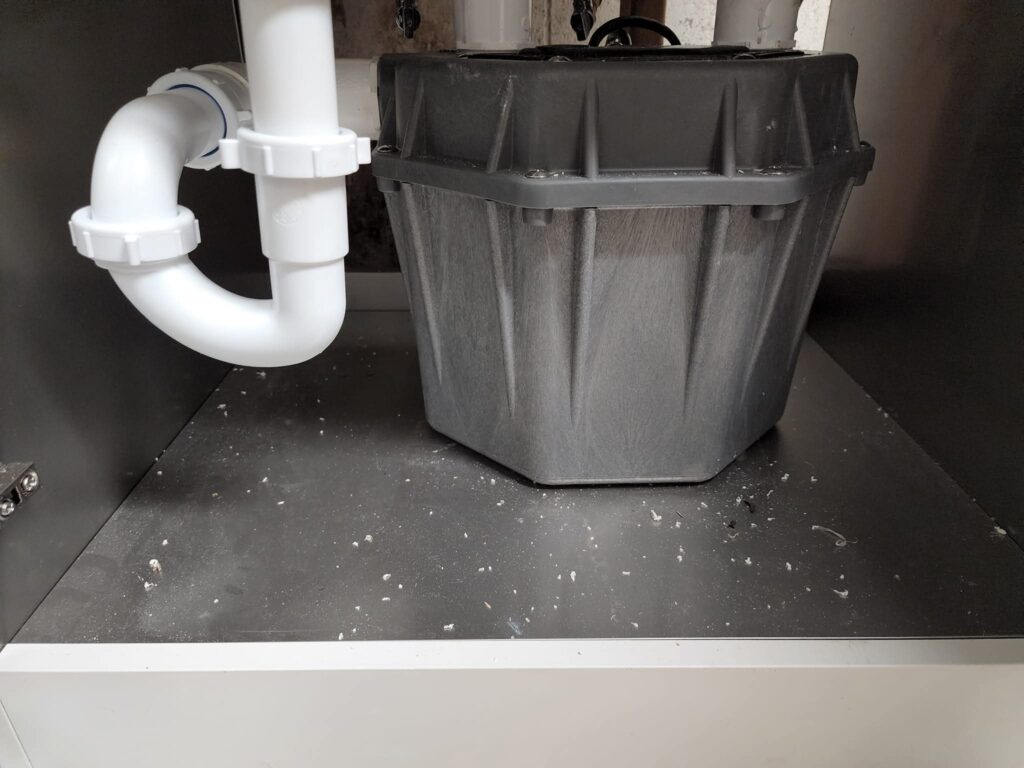
How to Reset a Jammed Garbage Disposal Safely
The first rule of clearing a jam is absolute: never put your hand into the grinding chamber while the unit has power. Turn the wall switch off, then shut off the breaker feeding the circuit or unplug the unit at the outlet inside the cabinet. Disposals are wired to start instantly, and a bound motor can free itself and spin the moment resistance is removed. Once power is confirmed off, use a flashlight to look inside the chamber and remove any visible object with long tongs or needle nose pliers. Silverware, bottle caps, and small bones are usually visible from above and come out easily. Removing the obstruction is what actually fixes the problem; everything after this step simply restores the unit to operation.
Most disposals include a hex socket in the center of the bottom housing, along with a small wrench that is often taped to the side or clipped underneath. Insert a quarter inch hex key into that socket and work it back and forth until the plate turns freely through a complete rotation in both directions. That motion breaks the bind and unwraps fibers that have wound around the hub. After the plate spins freely, press the small reset button on the bottom of the unit, which restores power after a thermal trip. Restore the breaker, run cold water, and switch the unit on briefly to confirm normal operation. A unit that hums again immediately still has something lodged inside, and continuing to try will overheat the motor.
Knowing when to stop is the mark of good judgment rather than an admission of defeat. A disposal that trips repeatedly, makes a grinding or rattling sound after the chamber has been cleared, leaks from the bottom shell, or produces no sound at all when switched on needs professional attention. Water dripping from the bottom of the housing indicates an internal seal failure, and that condition is not repairable; the unit has to be replaced. Leaks at the top usually mean the sink flange has lost its seal and needs to be reset with fresh plumber’s putty, while leaks at the side often trace to the dishwasher hose connection or the drain elbow gasket. Attempting these repairs during holiday cooking, with a cabinet full of supplies and guests in the house, rarely goes well. A licensed plumber can diagnose the cause in minutes and tell you honestly which of the three situations you are dealing with.
Garbage Disposal Maintenance Steps to Take Before Thanksgiving
The best time to find a disposal problem is several weeks before you need the appliance most. Start with a simple test run: turn on cold water, switch the unit on, and listen carefully to the sound it makes with no load in the chamber. A healthy disposal produces a smooth, consistent tone that changes pitch only slightly under load. Rattling, screeching, or a motor that takes a moment to come up to speed all indicate wear inside the unit or a foreign object resting in the chamber. Note how quickly the sink drains once the water is shut off, since a lingering swirl means the line beyond the disposal is already partially restricted. Catching that condition in advance gives you time to schedule service on your own terms.
Open the cabinet and inspect everything beneath the sink with a flashlight while you are at it. Look for corrosion or mineral staining on the bottom of the disposal housing, water spots on the cabinet floor, and dampness at the connection points where the dishwasher hose and the drain elbow attach. Squeeze the drain lines gently to check for softness or brittleness in older plastic fittings. Check the age of the unit if you can find a date on the label, since most residential disposals last roughly 8 to 12 years depending on use and water quality. An older unit that is already noisy or slow will not improve under holiday load. Replacing it in October or early November costs the same as replacing it in December, minus the stress.
Consider the capacity of the unit against the size of your gathering. Builder grade disposals rated at 1/3 horsepower handle light daily use adequately but struggle with volume, while units in the 3/4 to 1 horsepower range grind faster and stall far less often. Homes that host large meals regularly benefit from stepping up in both power and chamber size, and many newer models run noticeably quieter as well. If your drain line has a history of backing up, address the pipe before upgrading the appliance, since a stronger motor pushes more material into a line that is already restricted. Scheduling a drain cleaning and a disposal evaluation together gives you a complete picture of the system. That combination is the most reliable way to get through a holiday without a plumbing emergency.
Why You Need a Plumber for Garbage Disposal Problems Before Thanksgiving
Waiting until the sink stops draining turns a routine service call into an emergency, and holiday emergencies are the most expensive and least convenient kind. A plumber evaluating your kitchen in advance can identify a failing unit, a restricted drain line, or a marginal connection while there is still time to correct it calmly. That visit also confirms the parts of the system homeowners cannot easily see, including the condition of the branch drain and the connection between the disposal and the dishwasher. Plumb Medic serves Woodstock, Canton, Holly Springs, Marietta, Kennesaw, Roswell, Alpharetta, and the surrounding communities with the kind of straightforward assessment that lets you make a decision on your own timeline. The sections below explain what warrants a call, what a professional installation includes, and what sets our team apart.
Signs You Need Garbage Disposal Repair or Replacement Before the Holiday
Certain symptoms mean a disposal is past the point of maintenance and heading toward failure. Water dripping from the bottom of the housing signals a failed internal seal, and that condition always calls for replacement rather than repair. A motor that hums without turning after the chamber has been cleared and the plate has been freed by hand usually indicates worn bearings or a damaged plate. Frequent overload trips during ordinary use point to a motor that no longer produces its rated torque. Any of these, discovered in the days before Thanksgiving, deserves immediate attention.
Other symptoms involve the drain line rather than the appliance. A sink that drains slowly on both sides, gurgling from the adjacent basin when the disposal runs, or dirty water appearing in the dishwasher all indicate a restriction downstream of the unit. Replacing the disposal in these cases solves nothing, because the actual blockage sits in the trap, the branch line, or the main drain. A plumber can determine the location quickly and clear it properly with the right equipment. Getting the diagnosis right the first time saves you from buying an appliance you did not need.
Odors that persist after cleaning point to buildup inside the chamber or in the line just past it. Persistent smells often accompany the early stages of a grease deposit, which means a clog is developing even though water still moves. Addressing that condition now, while the drain still flows, avoids a complete stoppage during the busiest cooking day of the year. Suspect a leak somewhere under the sink but cannot pinpoint the source? Click here for our leak detection service. Early intervention is always the cheaper option.
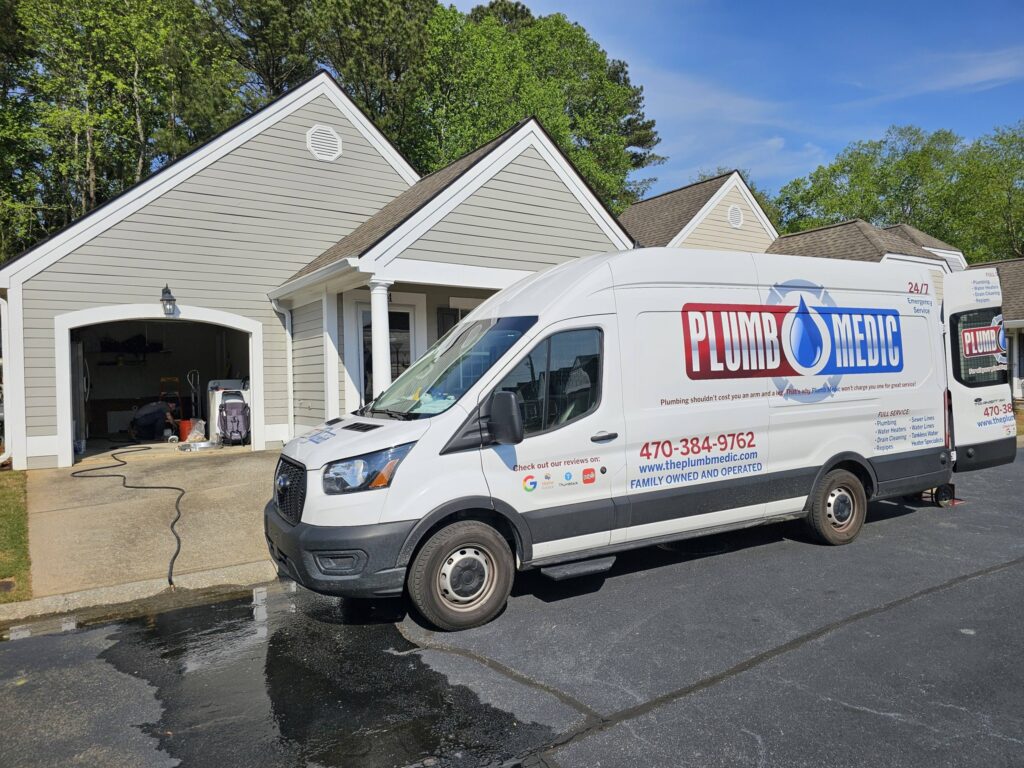
What Professional Garbage Disposal Installation Includes
A correct installation involves considerably more than swapping one unit for another. The sink flange has to be set with fresh plumber’s putty and drawn down evenly so the seal holds under years of vibration, and the mounting assembly has to be seated square to prevent a slow leak at the top of the unit. The drain elbow and gasket are replaced rather than reused, since compressed gaskets rarely reseal properly. Electrical connections are verified for correct grounding and secure strain relief inside the wiring compartment. Each of these details is a common failure point when a disposal is installed in a hurry.
The dishwasher connection deserves specific attention, because it causes more callbacks than any other part of the job. New disposals ship with a knockout plug sealing the dishwasher inlet, and that plug must be removed before the hose is attached. Leaving it in place blocks the dishwasher from draining entirely, which produces standing water in the appliance and a service call that feels like a broken dishwasher. The hose also needs proper routing and a secure clamp to prevent siphoning and leaks. Our technicians confirm every connection before the cabinet doors close.
Sizing and support round out a proper job. We help you match horsepower and chamber capacity to how your household actually cooks, which matters a great deal in homes that host large gatherings. The existing trap and drain arm are inspected during installation, since new equipment on a compromised line produces disappointing results. Planning a kitchen update alongside the new unit? Click here for our plumbing remodeling service. Doing the work together is more efficient than handling it in pieces.
Why Choose Plumb Medic for Garbage Disposal Service in Woodstock GA
Every technician at Plumb Medic is fully licensed and experienced, and we hold TracPipe and Navien certifications for the specialized work our customers rely on us to perform. We were named Business Rate’s Best of Woodstock Plumber for 2025, an honor that reflects how we treat the homes and families we serve throughout Cherokee, Cobb, Fulton, and Forsyth counties. Our emergency service runs 24/7, which matters on a holiday when most shops are closed and a kitchen backup cannot wait until Monday. We waive the diagnostic fee when we handle the repair, so an honest evaluation never costs you extra. Financing is available through Wisetack for larger jobs, and we offer discounts for military members and seniors.
Our approach to service reflects a simple belief about how this trade should work. We explain what we find, show you the condition of the equipment, and give you clear options rather than pressure. If a disposal can be repaired, we tell you so; if the seal has failed and replacement is the only sound choice, we explain exactly why. That transparency has built the reputation we carry throughout the North Atlanta area. We would rather earn a customer for a decade than sell one unnecessary appliance today.
Community matters to us as well, which is why we donate 2% of every service call to Children’s Healthcare of Atlanta to support local families. Our office is located at 225 Creekstone Ridge Suite 19, Woodstock, GA 30188, and we cover the surrounding communities daily. Do not let a garbage disposal problem take over your Thanksgiving; schedule an evaluation now while the calendar is still open and the work can be done on your schedule. Call Plumb Medic at (470) 384-9762 or email office@theplumbmedic.com to book garbage disposal repair, replacement, or drain cleaning before the holiday rush begins. One appointment this month is far easier than an emergency call with the turkey still in the oven.