
How to Drain Your Outdoor Faucets Before the First Hard Freeze
The first hard freeze in North Georgia usually arrives sometime between late November and early December, and it rarely gives homeowners much warning beyond a single cold snap in the forecast. One night in the mid twenties is all it takes to split a hose bib, crack a supply line inside an exterior wall, and turn a quiet evening into a flooded laundry room. Outdoor faucets sit on the coldest part of your house, exposed to wind and positioned outside the insulated building envelope, which means they freeze long before anything else in your plumbing system starts to struggle. Draining them is straightforward work that takes about twenty minutes on a typical home in Woodstock, Canton, or Acworth, and it requires almost no tools. Skipping that twenty minutes can cost thousands in water damage, drywall replacement, flooring repair, and emergency plumbing labor. The damage also tends to hide, because a pipe that splits behind siding often does not leak until the ice thaws days later. This guide covers why outdoor faucets fail in freezing weather, how to drain them the right way, and what to look for when the temperature climbs back up.
Why Outdoor Faucets Fail During the First Hard Freeze
A hard freeze is generally defined as several consecutive hours at or below twenty eight degrees, and that threshold matters because it is cold enough to freeze standing water inside metal that has no insulation around it. Water expands roughly nine percent as it turns to ice, and that expansion happens inside a rigid pipe that cannot grow with it. The break rarely happens at the point where the ice forms. Instead, pressure builds in the trapped column of water between the ice plug and the closed faucet handle, and the pipe ruptures at the weakest fitting or the thinnest section of wall. Copper tends to split lengthwise along the tube, while brass valve bodies crack at the casting. PEX has some ability to stretch and survive, though the crimped fittings and brass adapters attached to it usually do not. Understanding that failure pattern explains why draining the line matters more than simply covering the faucet.
Why Outdoor Faucets Burst During a Hard Freeze
The plumbing that serves an outdoor faucet almost always runs through unconditioned space before it reaches the exterior wall, passing through a crawl space, a garage ceiling, or a rim joist cavity where the temperature tracks closely with the air outside. That section of pipe holds water at rest, and water that is not moving gives up heat quickly once the air drops below freezing. Once an ice plug forms, the remaining liquid water behind it has nowhere to go, since the faucet handle is closed on one end and household pressure of roughly sixty to eighty psi is pushing from the other. Pressure inside that trapped section can climb into the thousands of psi, far beyond what a half inch copper line was ever designed to hold. The pipe splits, but the split stays sealed by ice while the cold weather lasts. Homeowners often assume they made it through the freeze without damage because nothing leaked overnight. The flooding starts when the sun comes out and the ice melts, which is why the busiest emergency calls of the season come the day after the cold, not during it.
Hose bibs are especially vulnerable because they sit at the very end of the run with nothing downstream to buffer them. A traditional compression style bib closes right at the handle, so the entire faucet body and the pipe behind it stay full of water year round. Anything left in that body freezes solid within a few hours of sustained cold, and the brass casting has thick walls in some places and thin walls in others, which creates predictable stress points around the packing nut and the spout. Older homes across Cherokee and Cobb County frequently still have these bibs, sometimes with no interior shutoff valve at all. When the casting cracks, the failure may be invisible from outside because the split faces into the wall cavity. Water then runs behind the siding, saturates the sheathing, and works its way toward the sill plate. By the time a stain shows up on interior drywall, the framing has usually been wet for days.
Attached garden hoses turn a manageable risk into a near certainty. A hose that is still connected holds a column of water against the faucet and blocks the small amount of gravity drainage the faucet would otherwise get. That trapped water freezes first, forms a plug right at the spout, and then transmits the expansion backward into the valve body and the supply line. It does not matter how new the faucet is or how mild the first freeze feels; a connected hose defeats the design. Hoses themselves also suffer, since ice splits the rubber and cracks the brass couplings that thread onto the bib. Disconnecting, draining, and storing hoses before the first cold night is the single highest value step in the entire process. If you do nothing else this fall, pull the hoses off.
How Frost Free Outdoor Faucets Still Fail in a Hard Freeze
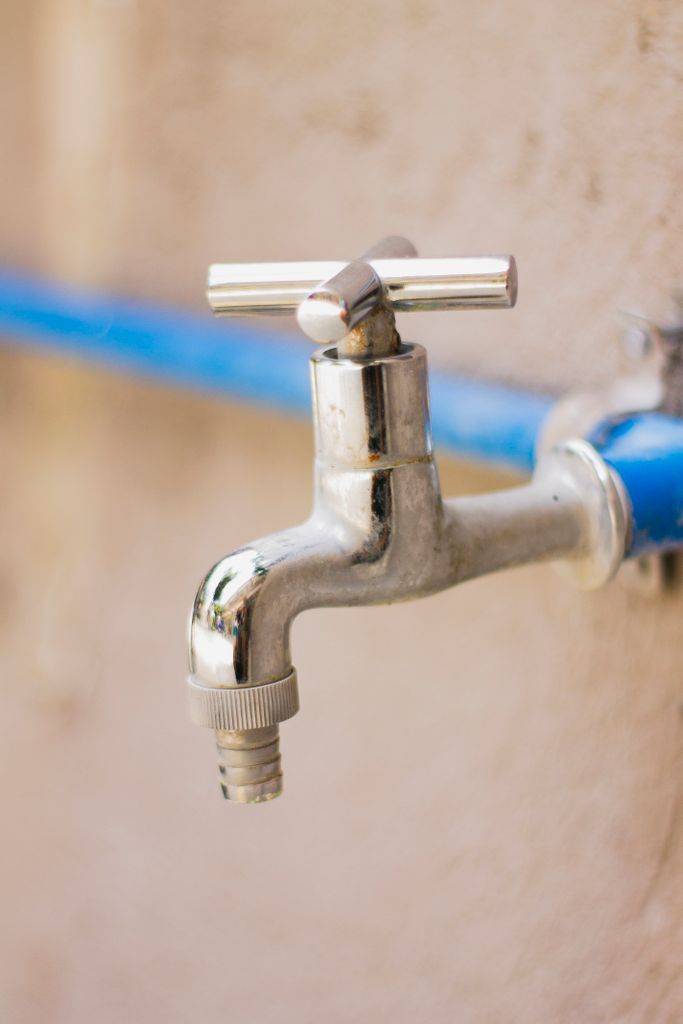
A frost free sillcock looks like an ordinary hose bib from outside, but the valve seat sits at the far end of a long stem that reaches six to fourteen inches back through the wall into heated space. When you close the handle, the water stops inside the warm part of the house, and the exposed barrel is supposed to empty itself by gravity. That design works extremely well and has become standard on new construction throughout the metro Atlanta area. It also fools people into thinking no winter preparation is needed. The truth is that a frost free faucet only performs as designed under specific conditions, and those conditions are violated in a large share of homes. Installation quality, hose habits, and vacuum breaker condition all determine outcomes.
The most common failure is a hose left attached through the winter. Water cannot drain out of the barrel if the spout is capped by a hose and nozzle, so the barrel stays full and freezes exactly like an old style bib would. Because the valve seat sits deep inside the wall, the resulting crack usually happens inside the wall cavity as well, and the leak stays hidden until someone opens that faucet in spring. At that moment the wall fills with water at full household pressure while the homeowner stands outside wondering why nothing is coming out of the spout. There is a quick test for this: turn the faucet on and place your thumb firmly over the opening. A healthy faucet builds pressure you cannot hold back, while a cracked one lets you block the flow easily because most of the water is escaping upstream into the wall. Anyone who finds that condition should shut off the water immediately and call a plumber.
Improper installation is the second failure mode, and it shows up more often than people expect. A frost free sillcock must be installed with a slight downward pitch toward the outside so gravity can empty the barrel. Installers who set the faucet perfectly level, or worse, tilted slightly upward, leave a puddle inside the tube that will freeze every winter until the barrel eventually cracks. Length matters too, since a six inch model installed on a wall with thick insulation and brick veneer may leave the valve seat sitting in cold space rather than conditioned space. The vacuum breaker on top of the faucet is another weak point, because that small plastic and rubber assembly holds water, sits fully exposed, and cracks under ice. A leaking vacuum breaker that drips down the wall all winter is a sign the internal parts have already failed. Replacement of the breaker cap is inexpensive, while replacement of a split sillcock means opening a wall.
Signs Your Outdoor Faucets Were Damaged by a Hard Freeze
Damage from a freeze does not always announce itself with an obvious spray of water, so it pays to know the quieter indicators. Reduced flow at the hose bib is a common early symptom, since a split pipe upstream bleeds off pressure before it reaches the spout. Unexplained increases on the water bill during winter months point toward a leak running into soil or a wall cavity where nobody sees it. Musty odors near the exterior wall, soft spots in drywall, and paint that bubbles at the baseboard all suggest water has been moving through the framing. A damp or muddy patch of ground at the foundation during a dry stretch of weather is another reliable clue. Homeowners in older neighborhoods around Roswell and Marietta should pay particular attention, because original galvanized and copper supply lines have decades of corrosion working against them already.
Sound can tell you as much as sight. A faint hiss or a running water noise inside a wall when every fixture in the house is off almost always means a pressurized line is leaking. Standing in a quiet room and listening near the exterior wall behind the outdoor faucet is a legitimate diagnostic step, not a folk remedy. Another approach uses the water meter: shut off every fixture and appliance, watch the meter dial or leak indicator for fifteen minutes, and note any movement. Movement with everything closed proves water is escaping somewhere in the system. That test does not tell you where the break is, which is where professional equipment earns its keep. Acoustic listening devices, thermal imaging, and pressure isolation testing locate the failure without demolishing walls at random. Want to find a hidden winter leak without tearing up your home? Click here for our leak detection service.
Timing gives you one more piece of information. Most freeze related bursts reveal themselves during the thaw, typically twenty four to seventy two hours after the coldest night, when the ice plug melts and opens the path for pressurized water. If you notice a problem in that window, the freeze is almost certainly the cause. Shut off the main water valve first, then open a faucet inside to relieve pressure in the system. Photograph everything before cleanup begins, since insurance carriers frequently cover sudden pipe bursts but ask for documentation. Do not run the water again to check the extent of the damage, because that only adds volume to what is already soaking your framing. Get the water off and get a licensed plumber on the way. Already dealing with a split pipe or an active burst? Click here for our burst pipe repair service.
How to Drain Your Outdoor Faucets Step by Step Before the Freeze
Draining outdoor faucets correctly follows a specific order, and doing the steps out of sequence leaves water sitting exactly where you do not want it. The goal is simple: remove every drop from the faucet body and from the section of supply pipe that sits in unconditioned space. That requires closing an upstream valve, opening the faucet, and giving gravity a path to work with. Most homes have everything needed for this job already, though a few older properties lack an interior shutoff and need one installed before winter arrives. Plan to do the work on a mild afternoon in October or early November rather than the night the forecast turns. Rushing the job in the dark with a freeze already underway is how steps get missed. Set aside half an hour and handle every exterior faucet on the property, including the one behind the shed that nobody thinks about.
Shutting Off the Water Before You Drain Outdoor Faucets
Start by locating the interior shutoff valve that feeds each outdoor faucet. In homes with basements, that valve usually sits on the wall directly behind the hose bib, often within a foot or two of where the pipe passes through the rim joist. Crawl space homes hide the valve underneath, and slab homes sometimes place it in a utility closet, a garage wall, or under a kitchen sink. Trace the pipe visually from the faucet inward and you will almost always find it. Older houses may have a gate valve with a round handle, while newer work typically uses a quarter turn ball valve with a lever. Label each valve with a tag once you find it, since future you will appreciate not repeating the search during an emergency.
Close the valve fully and confirm it actually stopped the water. Gate valves in particular fail internally after years of sitting untouched, and a handle that turns freely does not guarantee the gate inside dropped into place. Go outside, open the hose bib, and watch what happens; a steady stream that never weakens means the shutoff is not holding. Ball valves are far more reliable and should be turned so the lever sits perpendicular to the pipe. If your shutoff will not hold, treat that as a repair to schedule right away rather than a problem to work around. A failed valve means you have no way to isolate the exterior line during a freeze or during a repair. Replacing it is routine work and inexpensive compared to the alternative.
Many interior shutoff valves for hose bibs include a small drain cap, sometimes called a bleeder or waste cap, on the side of the valve body. That cap exists specifically for winterization, and it lets you empty the run of pipe between the valve and the exterior wall. Place a small bucket or towel underneath, then loosen the cap slowly with a wrench or pliers. Water will trickle out as air enters through the open faucet outside, which is why the faucet needs to be open before you touch the cap. Let it drain completely, then leave the cap loose or removed through the winter so any residual moisture has an escape route. Snug it back down in spring before you turn the water on. Homes with corroded or damaged supply lines feeding these valves often need more than a seasonal fix; click here for our water supply line service if your pipes show green corrosion, pinhole leaks, or heavy mineral buildup.
Opening and Draining Outdoor Faucets the Right Way
Once the interior valve is closed, go outside and open the hose bib completely, turning the handle counterclockwise until it stops. Water sitting in the faucet body and the exposed pipe will run out over the next several minutes. Leave the handle open for the entire winter season, because an open faucet gives any small amount of remaining water room to expand instead of pushing against a closed valve. This runs against instinct for a lot of homeowners, who see an open faucet and want to close it. Nothing will come out with the interior valve shut, and the open position is what protects the pipe. Write yourself a reminder for spring so the faucet gets closed before the water goes back on.
Frost free sillcocks get slightly different treatment. Remove the hose first, always, and give the barrel a few minutes to empty by gravity while the handle sits open. If you have an interior shutoff for that line, close it and drain the bleeder as described above for a second layer of protection. If no interior valve exists, the frost free design alone will handle a typical Georgia winter as long as the hose is off and the installation pitch is correct. Feel the barrel afterward and listen for sloshing when you tap it, which can indicate trapped water that is not draining. A faucet that will not empty needs attention before the cold arrives, since the problem will only repeat every year and eventually cause a break.
Finish by protecting the exterior fixture from wind and radiant heat loss. Insulated faucet covers cost a few dollars each and slip over the bib with a tightening strap, trapping a small pocket of warm air against the wall. They work well as a supplement, though they cannot save a faucet that still has water inside it or a hose attached. Foam pipe sleeves on any exposed pipe in a crawl space or garage add real value, especially on runs that hug an exterior wall. Close crawl space vents before the first hard freeze and confirm the access door latches shut, since wind moving through that space strips heat away from every pipe under the house. Check that any pipe insulation already installed has not slipped or been torn open by animals. These small measures compound, and together they carry a home through the coldest nights of a North Georgia winter.
Draining Hoses, Irrigation Lines, and Outdoor Faucets Together
Garden hoses need the same attention as the faucets they connect to. Disconnect each one, stretch it out along a slope or over a fence rail, and let the water run out from end to end before coiling it. Store hoses in a garage, shed, or basement rather than leaving them on the ground, where standing water inside will freeze and split the liner. Brass couplings crack easily under ice and cost more to replace than the hose itself in some cases. Splitters, timers, and quick connect fittings all hold water and should come off the bib entirely. Battery powered irrigation timers in particular fail fast in freezing weather and should be brought indoors with the batteries removed.
Irrigation systems require a more involved shutdown than hose bibs do. Shut off the dedicated supply valve to the system, then drain the backflow preventer, which is usually the most freeze sensitive component in the entire setup because it sits above ground with thin brass and internal rubber parts. Open the test cocks on the assembly to a forty five degree angle so trapped water can escape and any remaining moisture has expansion room. Many systems across the region use manual drain valves at the low points of each zone, which need to be opened one at a time. Systems without manual drains rely on a compressed air blowout, and that job carries real risk when done wrong. Excessive pressure damages heads, fittings, and valve diaphragms, so keep air below roughly eighty psi on rigid PVC and closer to fifty psi on flexible polyethylene pipe.
Do not forget the outdoor fixtures that are easy to overlook. Outdoor kitchens, pool equipment, wet bars on decks, detached garages, barns, and utility sinks in unheated shops all have supply lines that freeze at the same temperature as everything else. Drain and shut down each of those before the first hard freeze arrives, and treat any line running through an unheated structure as a priority. Well systems and pressure tanks in unheated pump houses deserve their own inspection, since a frozen pressure switch can leave a whole property without water. Homes with tankless water heaters mounted on an exterior wall or in a garage need attention too, because those units contain freeze protection that only works when the appliance has power. Losing electricity during a winter storm disables that protection, which is one reason freeze damage spikes after ice storms take down lines. Walk the entire property once in the fall and you will find at least one thing you forgot about last year.
Why You Need a Professional Plumber Before the First Hard Freeze
Most homeowners can handle hose removal and basic faucet draining without help, and that work genuinely prevents the majority of freeze failures. Some situations go beyond a do it yourself afternoon, particularly when a home lacks interior shutoff valves, has aging supply lines, or shows signs of a leak that already happened. A professional inspection before winter identifies vulnerable pipe runs, failed valves, and improperly installed sillcocks while there is still time to correct them. Repairs made in October cost a fraction of what emergency work costs in January. Plumb Medic works throughout Woodstock, Canton, Holly Springs, Acworth, Kennesaw, Marietta, Roswell, Alpharetta, and the surrounding communities, and our technicians see the same freeze damage patterns every year. Getting ahead of them is far easier than cleaning up after them.
When to Call a Plumber About Outdoor Faucets Before a Freeze
Call before winter if your home has no interior shutoff valve serving the outdoor faucets, because that single missing component removes your ability to isolate and drain the line. Installing one is a short job in most homes and provides protection for as long as you own the property. You should also call if an existing valve will not fully stop the flow, since a leaking shutoff makes proper winterization impossible. Faucets that drip constantly, wobble in the wall, or spray from the handle when opened have worn internal parts that will not survive a hard freeze. Any faucet that drains slowly or holds water in the barrel needs correction before temperatures drop.
Older properties deserve a closer look than newer ones. Homes built before the mid nineteen nineties often have compression style hose bibs, original valves that have never been exercised, and pipe runs through crawl spaces with minimal insulation. Galvanized steel supply lines add corrosion to the equation, narrowing the interior of the pipe and creating spots where ice forms faster. A plumber can evaluate the material, condition, and routing of those lines and recommend targeted upgrades rather than wholesale replacement. Sometimes the fix is as simple as relocating a short section of pipe out of an exposed cavity. Other times a partial repipe of the vulnerable run makes better financial sense.
Vacant and seasonal properties carry the highest risk of all, since nobody is present to notice a problem for days or weeks. Rental homes between tenants, houses listed for sale, and properties where the owner travels through the holidays all belong in this category. Full winterization goes beyond outdoor faucets and includes draining the water heater, blowing out interior supply lines, and adding antifreeze to traps. A plumber can perform that shutdown properly and document it for insurance purposes. Anyone leaving a Georgia property empty during December or January should schedule this work rather than gamble on a mild winter.
Repairs That Protect Outdoor Faucets After a Freeze
When a freeze has already caused damage, speed matters more than anything else. Shut off the main water supply, open an interior faucet to relieve system pressure, and call for service right away. Water that sits in framing and insulation begins growing mold within a day or two, and drying costs climb quickly. Our technicians locate the break, isolate the affected section, and complete the repair with materials rated for the application rather than temporary patches. Copper repairs get properly soldered or pressed joints, and PEX repairs get correctly sized crimp or expansion fittings.
Repair work after a freeze often reveals underlying conditions worth addressing at the same time. A pipe that split in an exterior wall may be part of a longer run that never should have been routed through that space to begin with. Rerouting the line through conditioned space eliminates the risk permanently instead of recreating it. Upgrading a compression bib to a properly pitched frost free sillcock with a functional vacuum breaker is another common improvement made during a repair visit. Adding a quarter turn ball valve with a bleeder cap gives you clean control for every future winter.
Not every freeze failure appears in an obvious place, and that is where diagnostic work matters. We use electronic leak detection, thermal imaging, and pressure testing to pinpoint hidden breaks behind walls, under slabs, and beneath yards. Locating a leak precisely means opening one small section of drywall instead of several. That precision saves money on the repair and on the restoration work that follows. Homeowners frequently find that the actual break sits many feet from where the water first appeared.
Why Choose Plumb Medic for Outdoor Faucet and Freeze Protection
Every technician at Plumb Medic is fully licensed and experienced, and we hold TracPipe and Navien certifications for gas and tankless work. We answer emergency calls twenty four hours a day, seven days a week, which matters during a cold snap when a burst pipe cannot wait until Monday morning. Our diagnostic fee is waived when we handle the repair, so you are not paying twice to solve one problem. Financing is available through Wisetack for larger repairs and repiping work. We also offer military and senior discounts on our services.
Local recognition reflects how we do business. Plumb Medic was named Business Rate’s Best of Woodstock Plumber for 2025, an award earned through consistent workmanship and straightforward communication with homeowners. We donate two percent of every service call to Children’s Healthcare of Atlanta, supporting families throughout our community. Our office sits at 225 Creekstone Ridge Suite 19 in Woodstock, and we serve homes across Cherokee, Cobb, Fulton, Forsyth, Paulding, and Bartow counties. Being local means we understand exactly how North Georgia winters behave and which neighborhoods have which plumbing systems.
Preparing your outdoor faucets before the first hard freeze protects your walls, your floors, and your budget, and it takes far less time than most homeowners expect. If you are unsure about your shutoff valves, your pipe condition, or your winterization plan, our team will walk the property with you and handle whatever needs attention. We will also repair freeze damage quickly when prevention comes too late, with honest pricing and clear explanations at every step. Call Plumb Medic at (470) 384-9762 or email office@theplumbmedic.com to schedule your freeze protection service before the cold arrives. One appointment now can prevent an emergency later this winter.