
How Hard Water Is Wrecking Your New Faucet Finish in Less Than a Year
You spent good money on that new faucet. The brushed nickel finish looked stunning the day it was installed. Six months later, white crust circles the base, the shine has dulled, and the spout has rough patches that feel like sandpaper. Hard water is the culprit. Most homes across Cherokee County and the greater Atlanta metro sit on water with mineral content high enough to damage chrome, nickel, brass, and matte black finishes in under a year. The damage starts on day one, even though you cannot see it for months.
What Hard Water Does to Faucet Finishes Around Your Home
Hard water carries dissolved calcium and magnesium picked up as groundwater moves through limestone and other mineral-rich rock. When that water sits on a faucet finish, the moisture evaporates and the minerals stay behind. Those minerals bond to the metal surface and to each other, building thicker deposits with each use. The deposits trap moisture against the finish, which accelerates corrosion underneath. Acidic cleaners used to scrub the deposits off then strip the protective coating, leaving raw metal exposed. The cycle keeps repeating until the finish fails completely.
How Hard Water Mineral Buildup Destroys a Faucet Finish
Calcium carbonate is the main offender in hard water mineral buildup. It forms a chalky white crust on faucet bases, handles, and aerators within weeks of installation. The crust looks like a cosmetic problem, but the chemistry going on underneath is far more serious. As the calcium bonds to the chrome or nickel coating, it creates microscopic pits in the surface. Water seeps into those pits and reaches the base metal below. Corrosion starts there and spreads outward, lifting the finish away from the faucet body.
Magnesium plays a different role in the destruction. It tends to leave behind a grayish film that dulls polished surfaces and gives matte finishes a blotchy appearance. The film is harder to remove than calcium deposits because it bonds more aggressively to metal. Homeowners often scrub at it with stiff brushes or abrasive pads, which scratches the finish and gives future buildup more surface area to cling to. Each cleaning session removes a little more of the protective coating. The faucet looks worse after every wipe-down.
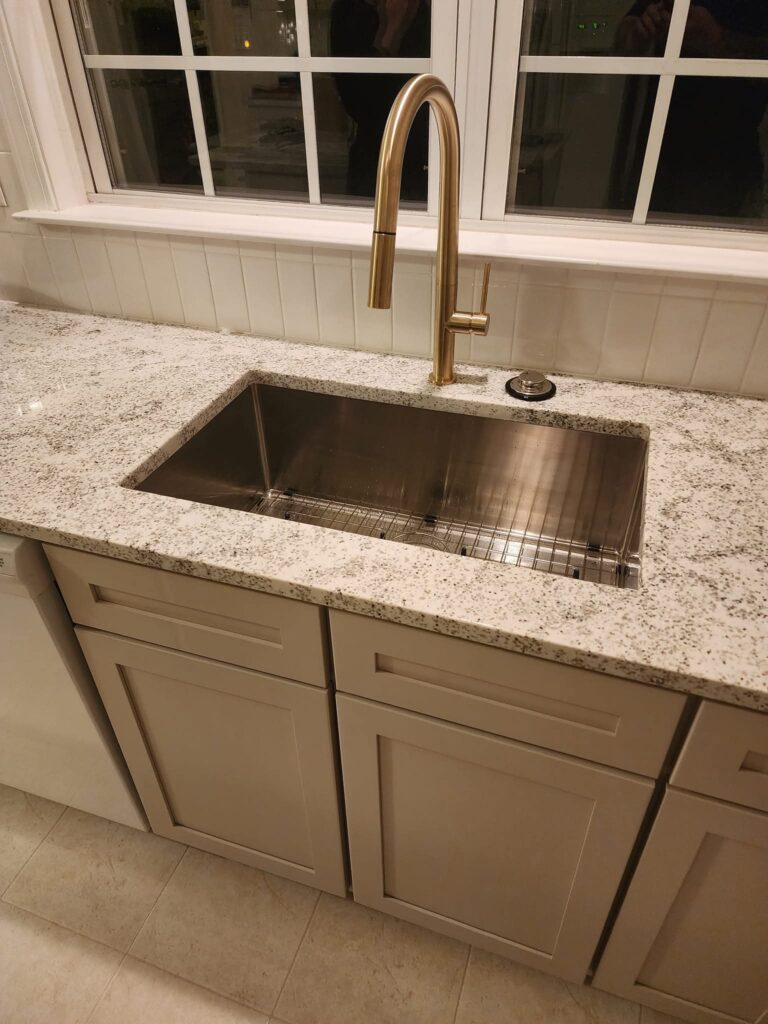
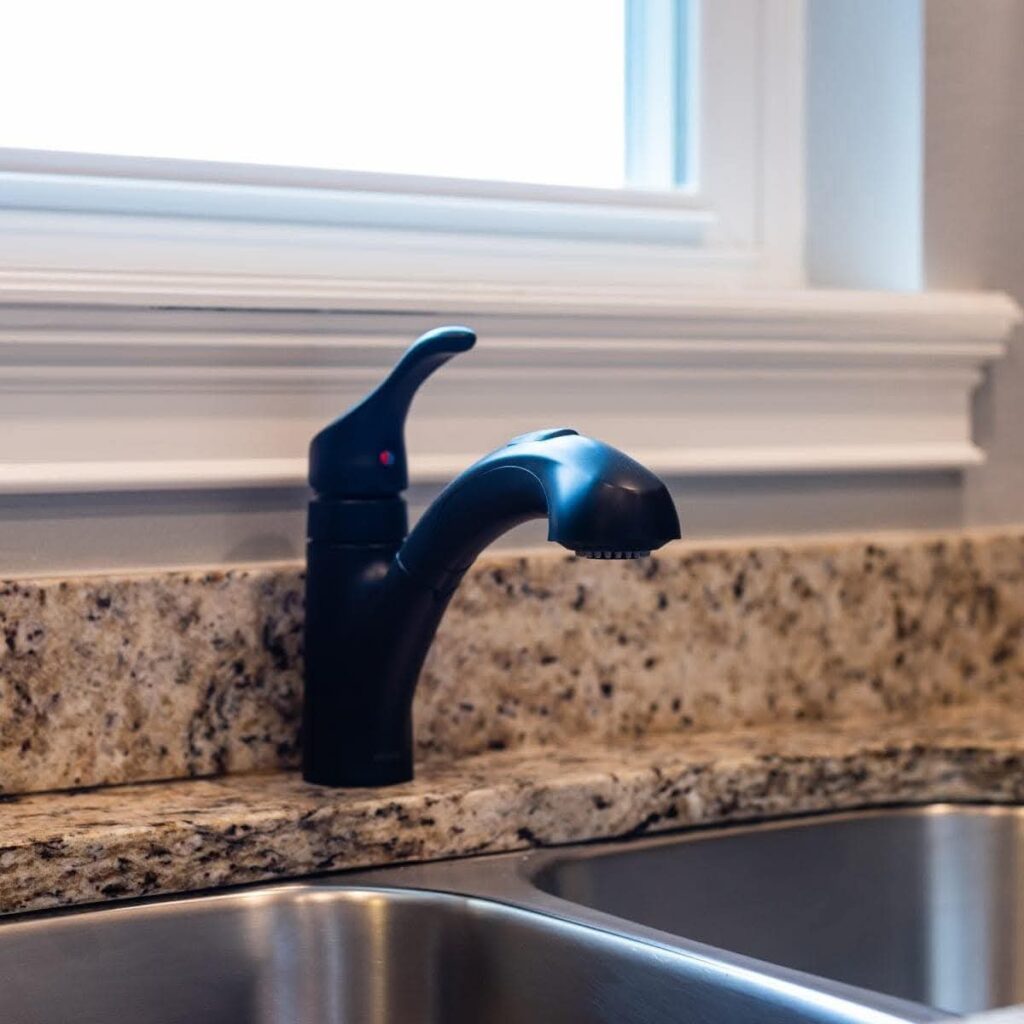
The damage compounds faster on certain finishes than others. Matte black, oil-rubbed bronze, and brushed gold finishes are especially vulnerable because their textured surfaces give minerals more places to lock in. Polished chrome holds up slightly better, but it still pits and clouds over time. Brass and copper faucets develop green oxidation streaks where hard water has stripped the lacquer. By the eighth or ninth month, the finish damage becomes obvious from across the room. The faucet that looked premium at installation now looks like a builder-grade piece that has been in service for ten years.
How Hard Water Corrodes the Hidden Parts of Your Faucet
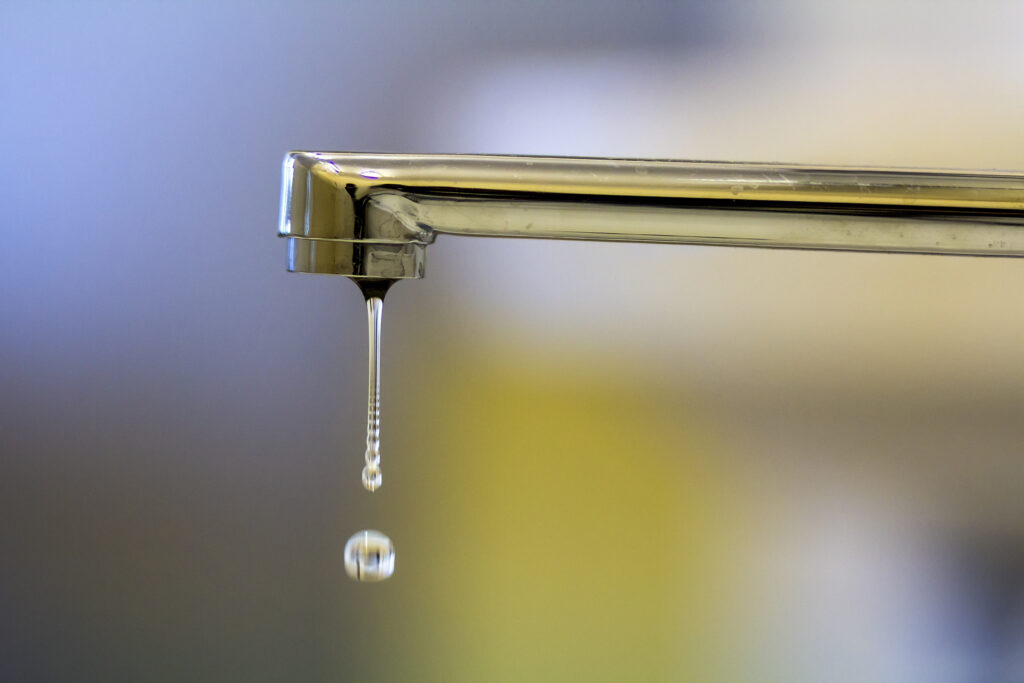
The visible damage to a faucet finish is only part of the story. Hard water is also eating away at the cartridge, the aerator, and the supply connections inside the fixture. Mineral buildup inside the spout reduces water flow and changes the spray pattern. You may notice the stream splitting in odd directions or the pressure dropping for no apparent reason. The cartridge stiffens as scale forms around the moving parts. Handles get harder to turn, and the faucet starts to drip even when shut all the way off.
The aerator screen at the tip of the spout clogs first because the openings are so small. Once enough minerals collect there, water sprays sideways or comes out as a weak trickle. Many homeowners assume the faucet is failing and replace it. The replacement starts clogging within months because the underlying water quality has not changed. Hard water does not care how new the fixture is. It deposits minerals at the same rate regardless of the brand or price tag.
Supply lines and shutoff valves take a beating too. Scale builds up inside the flexible connectors, narrowing the passage and reducing pressure to the faucet. The shutoff valves under the sink can seize up entirely if they are not exercised regularly, which becomes a problem when you actually need to turn off the water. Hard water is the slow leak that costs homeowners thousands over time. Need to address hard water at the source before it damages another fixture? Click here for our water filtration systems service.
How Hard Water Stains Permanently Mark Faucet Surfaces
Hard water stains start as faint cloudy spots that wipe away easily. Within a few months, the spots harden into a permanent etching pattern across the finish. The minerals have chemically bonded to the metal at that point, and no amount of polishing will remove them without damaging the surface further. Some stains take on a rust-colored tint when iron is present in the water supply. Others turn greenish where copper has leached in from the pipes. The discoloration is the finish itself reacting, not just a surface coating.
Removing set-in hard water stains requires acidic cleaners like vinegar, lime scale remover, or commercial descalers. These products work, but they also strip away the protective clear coat that manufacturers apply to faucet finishes. Once that clear coat is gone, the underlying metal oxidizes much faster. The faucet now needs constant attention to stay looking decent. Skip a week of polishing and the stains return worse than before. The finish has effectively become high-maintenance for the rest of its service life.
Etching is the final stage of hard water staining and it is irreversible. The metal surface develops a frosted or pitted texture where the minerals dissolved into the finish over time. Light no longer reflects evenly off the surface, so the faucet looks dull no matter how clean it actually is. Replacing the cartridge or polishing the spout makes no difference. The only fix is replacing the entire fixture and treating the water before installing the new one. Otherwise, the next faucet meets the same fate within a year.
Why Hard Water Damages Faucets So Quickly in Georgia Homes
Water hardness in the Atlanta metro region runs higher than the national average in many neighborhoods. Homes pulling from municipal supplies in Woodstock, Canton, Kennesaw, and Roswell typically see hardness levels between 60 and 120 parts per million. Well water customers often deal with hardness above 180 parts per million, which the U.S. Geological Survey classifies as very hard. Those numbers translate directly into how much scale your faucets are exposed to every day. The higher the hardness, the faster the damage.
Why Georgia Hard Water Hits Faucets Harder Than You Expect
Georgia sits on a geology that loves to dissolve minerals into groundwater. Limestone, dolomite, and granite formations across the northern part of the state all contribute calcium and magnesium to the water supply. Even municipal treatment plants do not remove hardness because doing so is expensive and not required by drinking water standards. The water leaving the treatment facility is safe to drink, but it still carries enough dissolved minerals to scale up your fixtures. By the time it reaches your kitchen or bathroom, every drop is loaded with the ingredients for faucet damage.
The summer months are especially rough on faucets in Georgia. Higher water demand during hot weather means treatment plants pump harder and faster, which sometimes pulls additional sediment and minerals into the supply. Hot water also accelerates mineral precipitation. When you run the hot tap, calcium and magnesium come out of solution faster and deposit on the faucet at a higher rate. The bathroom faucets used for hand washing and the kitchen faucet used for hot dish water both take the brunt of summer scale buildup.
Well water customers in Cherokee, Forsyth, and Bartow counties deal with even more aggressive conditions. Private wells often have hardness levels two or three times higher than municipal water. Iron, manganese, and sulfur compounds may also be present, which add their own staining and corrosion problems on top of the basic hardness damage. A new faucet installed without water treatment in a well water home can show visible finish damage within four to six months. The investment in a quality fixture is wasted if the water feeding it remains untreated.
Why Faucet Manufacturers Do Not Cover Hard Water Damage
Read the warranty on any faucet you buy and you will find an exclusion for damage caused by water quality. Manufacturers know hard water destroys finishes, and they have written themselves out of any responsibility for it. The lifetime finish warranty that sounded so reassuring at the showroom does not apply once mineral deposits start the damage process. Homeowners who file warranty claims for pitted or discolored finishes get denied. The manufacturer points to the water as the cause and walks away from the claim.
This warranty gap puts the financial burden squarely on the homeowner. A premium kitchen faucet runs anywhere from 400 to 1,200 dollars. Bathroom faucets range from 150 to 800 dollars each. Replacing damaged fixtures every two or three years adds up fast, especially in homes with multiple bathrooms. The math gets worse when you factor in the labor cost of swapping out faucets and the risk of water damage during installation. Hard water turns plumbing fixtures into consumable items rather than long-term investments.
Some homeowners try to work around the warranty exclusion by aggressively cleaning their faucets to prevent visible damage. This approach backfires because the cleaning products themselves cause finish wear. Acidic descalers, abrasive pads, and even some non-abrasive cleaners contain chemicals that degrade the clear coat on modern finishes. The faucet ends up damaged either way. The only real solution is treating the water before it ever reaches the fixture. Curious about what is in your water? Click here for our leak detection service which often catches water quality issues during inspections.
Why Whole-Home Water Treatment Protects Every Faucet at Once
A water softener or whole-home filtration system removes the calcium and magnesium before the water enters your plumbing. The treated water leaves no mineral deposits on faucets, showerheads, or any other fixture. The finish on a faucet protected by softened water can last fifteen to twenty years instead of one or two. The math on whole-home treatment works out favorably for most households once you account for the fixtures it saves. A typical system pays for itself within five to seven years through avoided replacement costs alone.
Softened water also extends the life of water heaters, dishwashers, washing machines, and any other appliance that uses water. The same scale that damages faucets builds up inside heating elements and pump housings, reducing efficiency and shortening service life. A water heater running on hard water typically lasts eight to ten years. The same unit running on softened water often makes it past fifteen. The system protects every water-using device in the home simultaneously.
The installation of a whole-home system is straightforward in most Georgia homes. The unit ties into the main water line where it enters the house, usually in a garage, basement, or utility closet. Salt-based softeners need a drain connection and a periodic salt refill. Salt-free conditioners require less maintenance but work through a different process. A licensed plumber can evaluate your water and recommend the right approach. Skipping this step and continuing to fight hard water at the faucet level is a losing battle.
Why You Need Professional Help to Stop Hard Water Damage
Hard water damage to faucets is a symptom of a much bigger problem affecting your entire plumbing system. Fixing it at the faucet level alone is like mopping up a leak without turning off the source. A licensed plumber can test your water, identify the specific minerals causing damage, and recommend a treatment system sized for your household. The team at Plumb Medic has been serving Woodstock and the surrounding communities with water quality solutions that actually work. Acting early saves money and frustration down the road.
Why a Water Quality Assessment Matters for Faucet Protection
A proper water quality assessment goes beyond a basic hardness test. The plumber checks pH levels, iron content, manganese, chlorine, sediment, and dissolved solids. Each of these factors influences how the water interacts with your faucets and pipes. Treating only for hardness when iron is also present leaves half the problem unsolved. The assessment gives a complete picture of what is flowing through your home so the right treatment system can be chosen. Skipping this step often leads to buying the wrong equipment.
The assessment also looks at your household water usage patterns and the size of your plumbing system. A two-person home needs a different system than a six-person home with three bathrooms. Peak demand matters because undersized systems cannot soften water fast enough during busy times. The result is hard water bleeding through during morning showers or evening dishwashing. A correctly sized system handles peak loads without losing capacity. The plumber matches the equipment to your real water needs.
Existing damage to fixtures and pipes also gets documented during the assessment. Scale buildup inside supply lines, water heaters, and appliances can be measured indirectly through pressure tests and flow checks. Heavily scaled systems may need flushing or component replacement before the new water treatment system goes online. Cleaning up the existing damage first prevents loose scale from breaking free and clogging the new equipment. The assessment determines what work needs to happen and in what order.
Why Professional Installation Matters for Water Treatment Systems
Water treatment systems involve cutting into the main water line and adding bypass valves, drain connections, and electrical hookups. The installation has to meet local plumbing codes and pass inspection if permits are required. A licensed plumber knows the code requirements for Cherokee County, Cobb County, and the other jurisdictions in the service area. DIY installations often miss code details that show up later during home inspections or insurance claims. Getting the installation right the first time avoids these headaches.
The plumbing connections themselves require specific materials and techniques. Copper, PEX, and CPVC all behave differently when joined to the brass fittings used in most water softeners. Mixing materials incorrectly creates galvanic corrosion that leads to leaks down the road. The drain line for a salt-based softener has to be sized and routed to prevent backflow. Electrical hookups need a properly grounded outlet on a dedicated circuit. Each of these details affects how long the system lasts and how well it performs.
Commissioning the system properly is the final piece of a quality installation. The plumber programs the regeneration cycle based on your water hardness and household usage. The initial salt charge and brine tank fill have to be done correctly for the system to start working immediately. A quick test of the treated water confirms the softener is doing its job. The homeowner gets walked through basic maintenance and what to watch for. None of this happens with a box-store install, which is one reason those systems often underperform.
Why Choose Plumb Medic for Your Water Treatment Needs
Plumb Medic has earned a reputation across Woodstock and the greater Atlanta metro for honest plumbing work that lasts. All technicians are fully licensed and experienced, with specific training on water filtration and softening systems. The company holds TracPipe and Navien certifications, which speaks to the technical depth of the team. Customers in Kennesaw, Roswell, Marietta, Canton, and the surrounding communities have made Plumb Medic the Business Rate Best of Woodstock Plumber for 2025. That recognition comes from delivering results, not from advertising.
The service experience at Plumb Medic is built around making things easy for the customer. Diagnostic fees are waived when Plumb Medic handles the repair, so you are not paying twice for the same visit. Financing is available through Wisetack for larger projects like whole-home water treatment systems. Military and senior discounts apply to qualifying customers. Two percent of every service call goes to Children’s Healthcare of Atlanta to support local families dealing with medical challenges. The community focus runs deep at this company.
Twenty-four-seven emergency service is available for plumbing problems that cannot wait. Hard water damage is rarely an emergency, but related issues like burst pipes from corroded fittings or failed water heaters often are. The same team that installs your water treatment system also handles the urgent calls when something goes wrong elsewhere in your plumbing. Want to protect your faucets and your whole plumbing system from hard water damage? Click here for our water filtration systems service. Call Plumb Medic at (470) 384-9762 to schedule a water quality assessment and start protecting your fixtures today.